
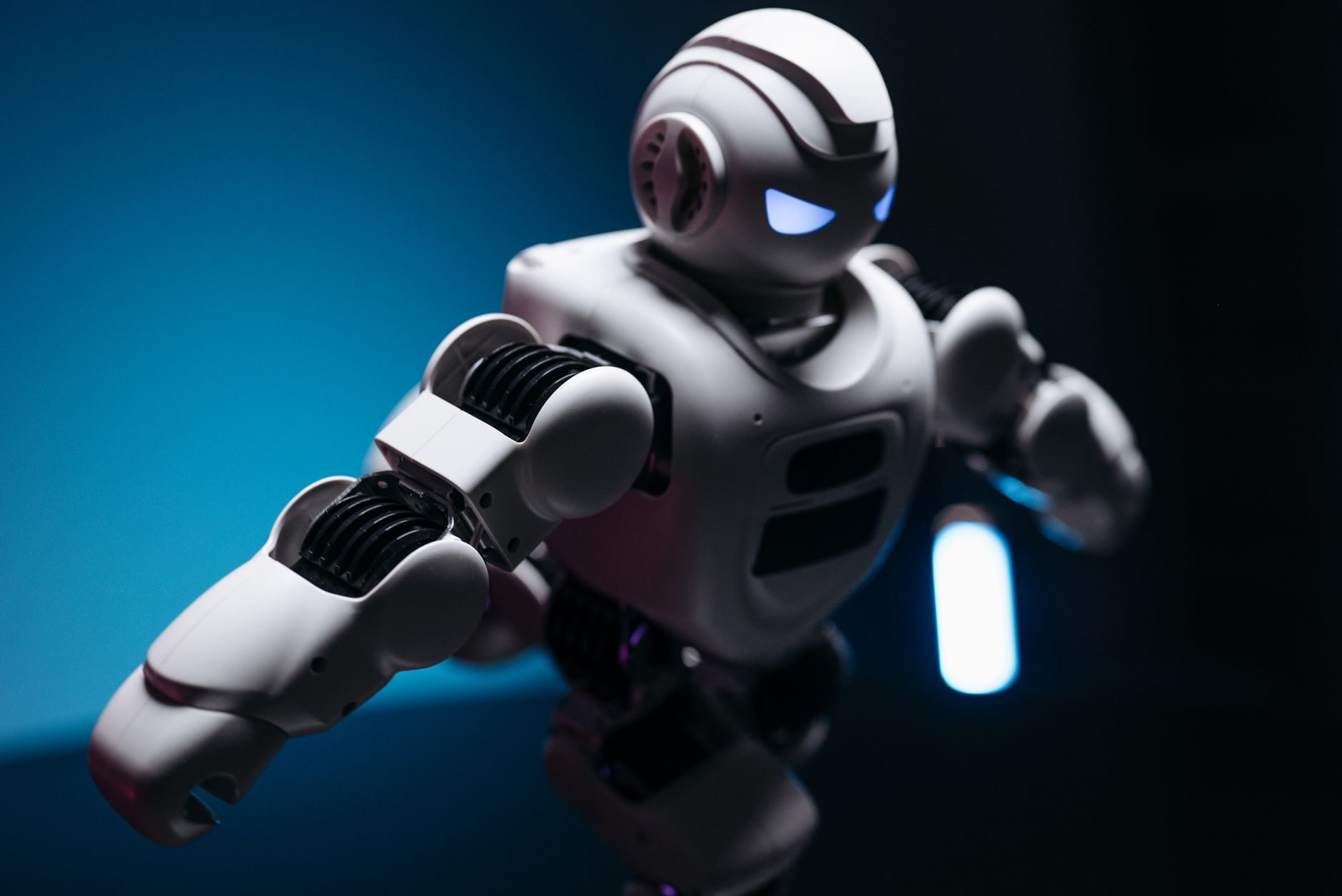
Teaching humanoid robots to move naturally and follow complex instructions has long been a challenge due to the complexity of coordinating arms, legs, and fingers while maintaining balance. A newly published research paper introduces a breakthrough method called VioLA that allows robots to learn general-purpose whole-body control directly from vast amounts of human motion data. This approach could enable robots to perform a wide range of tasks without needing task-specific training, marking an important step toward more versatile and responsive humanoid robots.
Key Takeaways
- VioLA learns humanoid control by predicting abstract representations of body and hand movements, called motion latents, instead of direct robot joint commands.
- The system leverages a huge dataset of 140.6 million frames of motion, with over 93% coming from human demonstrations rather than scarce robot data.
- VioLA achieves 100% success in locomotion tasks on a real robot without any fine-tuning, outperforming previous methods that required task-specific training.
- The approach also reaches nearly 89% success in manipulation tasks, showing promise across diverse whole-body actions.
Controlling humanoid robots is difficult because their many joints—arms, legs, hands—must work in harmony to perform tasks while keeping balance. Traditional methods try to teach robots by directly predicting joint-level commands, but this is challenging due to the complexity and tight coupling of movements. Additionally, collecting demonstrations from robots is costly and limited, making it hard to train generalist policies that work across many tasks.
The researchers behind VioLA tackled these problems by changing the way the robot’s control policy thinks about actions. Instead of outputting precise joint movements, VioLA predicts “motion latents,” which are compact, abstract codes representing whole-body and hand motions. These latents are then translated into actual joint commands by pretrained controllers. Crucially, the team developed encoders that map both human and robot motions into the same latent space, allowing human motion data to be used directly for training.
This means that the huge amount of existing human motion data—such as recordings of people walking, reaching, or manipulating objects—can be repurposed to teach robots how to move. By training VioLA on this combined dataset, the researchers created a generalist policy that can immediately perform locomotion and manipulation tasks on a real humanoid robot without additional task-specific training. This “zero-shot” capability is a significant advance over previous systems that needed fine-tuning for each new task.
Beyond demonstrating impressive locomotion and manipulation success rates, the approach was tested with different underlying model architectures, showing its robustness and general applicability. The researchers plan to release their code and pretrained models to support further development in the field.
Looking ahead, VioLA’s ability to learn from abundant human motion data opens up new possibilities for humanoid robots to adapt to diverse environments and tasks with minimal human intervention. While challenges remain in scaling to even more complex behaviors and real-world unpredictability, this research represents a promising step toward robots that can more naturally and flexibly assist humans in everyday settings.
Based on research published on arXiv by Mert Albaba, Jens Beißwenger, Anna Manasyan et al..