
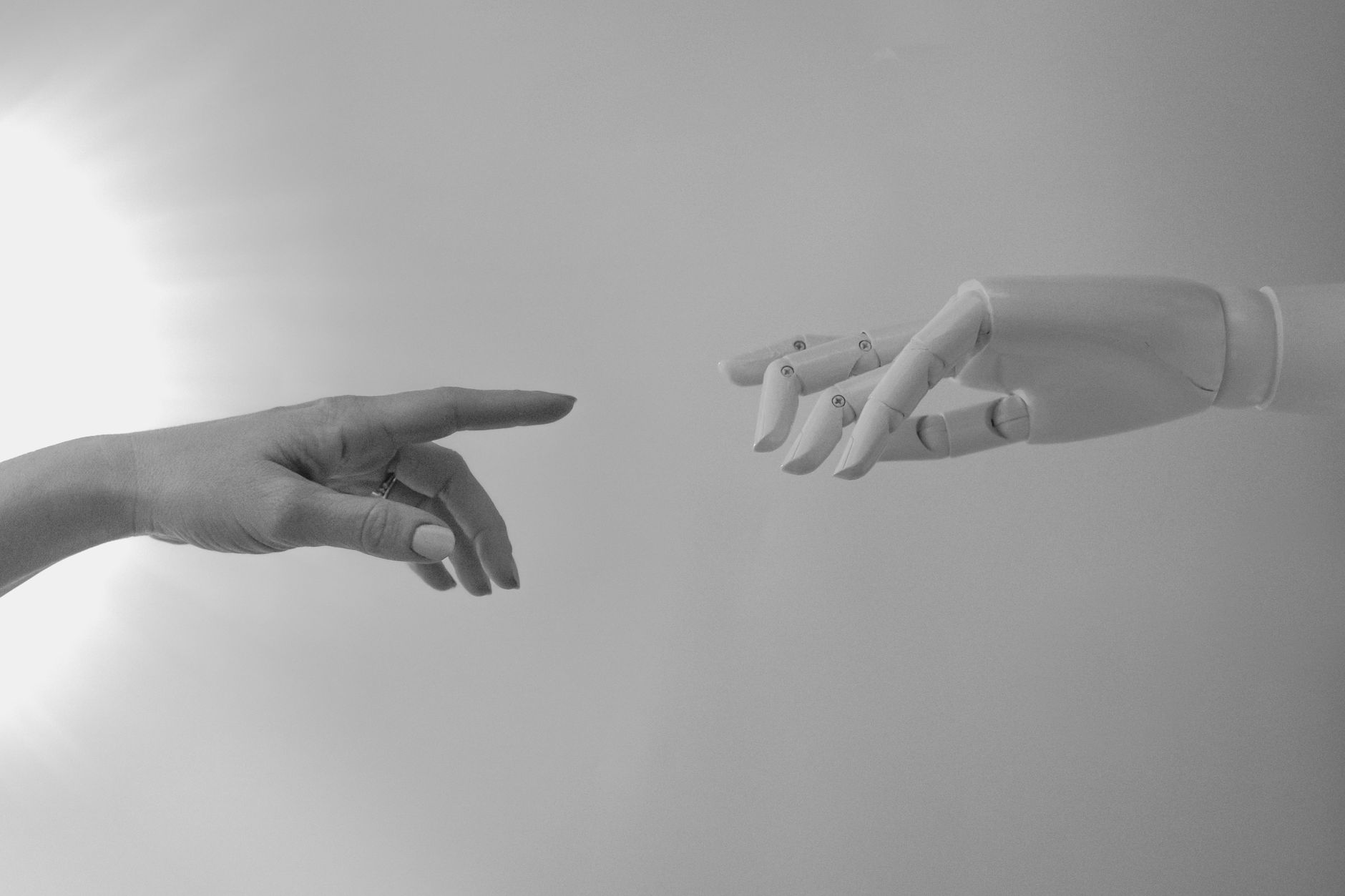
Artificial intelligence has revolutionized the world of translation, handling an astonishing volume of text with remarkable speed and efficiency. Google’s translation service alone processes about one trillion words every month, reflecting the widespread adoption of AI-powered tools across industries and languages. Yet, despite these advances, human translators remain indispensable—especially in contexts where precision is critical and errors can have serious consequences. The question now is not whether AI can translate, but how long human expertise will continue to be necessary to ensure accuracy and nuance.
The Limits of AI in Capturing Language Nuance
Language is far more than a string of words; it is a complex web of cultural references, idioms, and contextual cues. AI translation systems excel at literal and formulaic text but often stumble over idiomatic expressions and subtle meanings. For example, the French phrase “Il pleut des cordes” literally translates to “It’s raining ropes,” which, if taken at face value, sounds nonsensical in English. A skilled human translator would recognize this as equivalent to “It’s raining cats and dogs.” AI can sometimes bridge this gap when translating between widely studied language pairs, but struggles with less common ones, such as Indonesian, where equivalent idioms may not exist or differ significantly.
This challenge is rooted in how AI translation models operate. They rely on statistical probabilities and pattern recognition rather than true understanding. As François Yvon, a research director at the French National Centre for Scientific Research (CNRS), explains, AI often guesses the most probable translation rather than the definitively correct one. This probabilistic approach means AI can produce fluent and natural-sounding translations that still contain subtle errors, especially when context is ambiguous or complex.
High-Stakes Fields Where Human Translators Are Irreplaceable
While AI can handle everyday translations with growing competence, sectors such as law, medicine, and diplomacy demand a level of accuracy that machines have yet to reliably achieve. Legal documents, for example, are fraught with specialized terminology and nuanced phrasing. Ariella Baltié, a legal translator, recounts how AI mistranslated “Le demandeur” (the plaintiff) as “the requester,” a subtle but critical error that could undermine legal proceedings. Similarly, AI confused the phrase “épouse Y” (wife of Y) with “marries Y,” altering the meaning entirely.
In medical translation, the stakes are even higher. Carol Bereuter, a specialist in medical translations, highlights how a single mistranslated Greek letter representing dosage units could lead to a thousand-fold overdose, a potentially fatal mistake. The challenge is compounded by AI’s increasing fluency; errors no longer stand out as awkward or clunky but can be hidden in perfectly natural-sounding text, making them harder for human reviewers to detect.
Why Human Review Remains a Critical Step
Organizations like the Open Knowledge Association (OKA), which translates Wikipedia articles, demonstrate the hybrid model that currently defines the industry. AI generates initial drafts, dramatically reducing costs and turnaround times, but human translators still review every sentence to catch errors and ensure fidelity to the original text. According to OKA’s founder John Zimmerman, the quality of AI output has improved so much that skipping human review is becoming tempting, but the risk of introducing errors—some of which can change the meaning—remains significant.
A recent study by OKA found that 27% of AI-generated text required correction before publication, with most errors introduced by the AI itself. Approximately 5 to 6% of these mistakes altered the meaning of the source material, a margin too high for critical applications. This underscores the ongoing need for human oversight, particularly where trust, reputation, and legal or medical consequences are involved.
The Future of Translation: Collaboration Between AI and Humans
Experts agree that AI will continue to improve, potentially incorporating meta-cognitive capabilities—systems that not only translate but also evaluate and critique their own output. François Yvon envisions a future where multiple AI tools work in tandem: one to translate, another to assess accuracy, and a third to refine the result. Such a layered approach could reduce errors and increase reliability.
However, the ultimate breakthrough may come when AI systems can express uncertainty, signaling to human translators when a passage requires closer scrutiny. This would mark a shift from AI as a black-box translator to a collaborative assistant that highlights ambiguities and potential pitfalls.
Until then, human translators will remain vital, especially in high-stakes environments where even minor errors can have profound consequences. The partnership between AI’s speed and scale and human judgment and cultural insight appears set to define the translation industry for years to come.
Conclusion: A Balanced Coexistence
AI translation has transformed the accessibility and efficiency of multilingual communication, lowering costs and expanding reach. Yet, the complexity of language and the real-world impact of mistranslations ensure that human translators remain essential. As AI tools evolve, the best outcomes will likely arise from combining machine efficiency with human expertise—leveraging the strengths of both to navigate the subtle, high-stakes terrain of language.
Recommended reading
For more context, see related Peack News coverage and explainers linked below.
- Run-to-run differences in AI query results reveal hidden uncertainty in language model judgments
- OpenPA simplifies pronunciation assessment with a new AI approach that needs no forced alignment
- Evaluating How Minecraft Bots Learn and Improve Over Time
- Explainer: Complete Guide to AI Regulation
- Explainer: Global AI Companies Landscape