
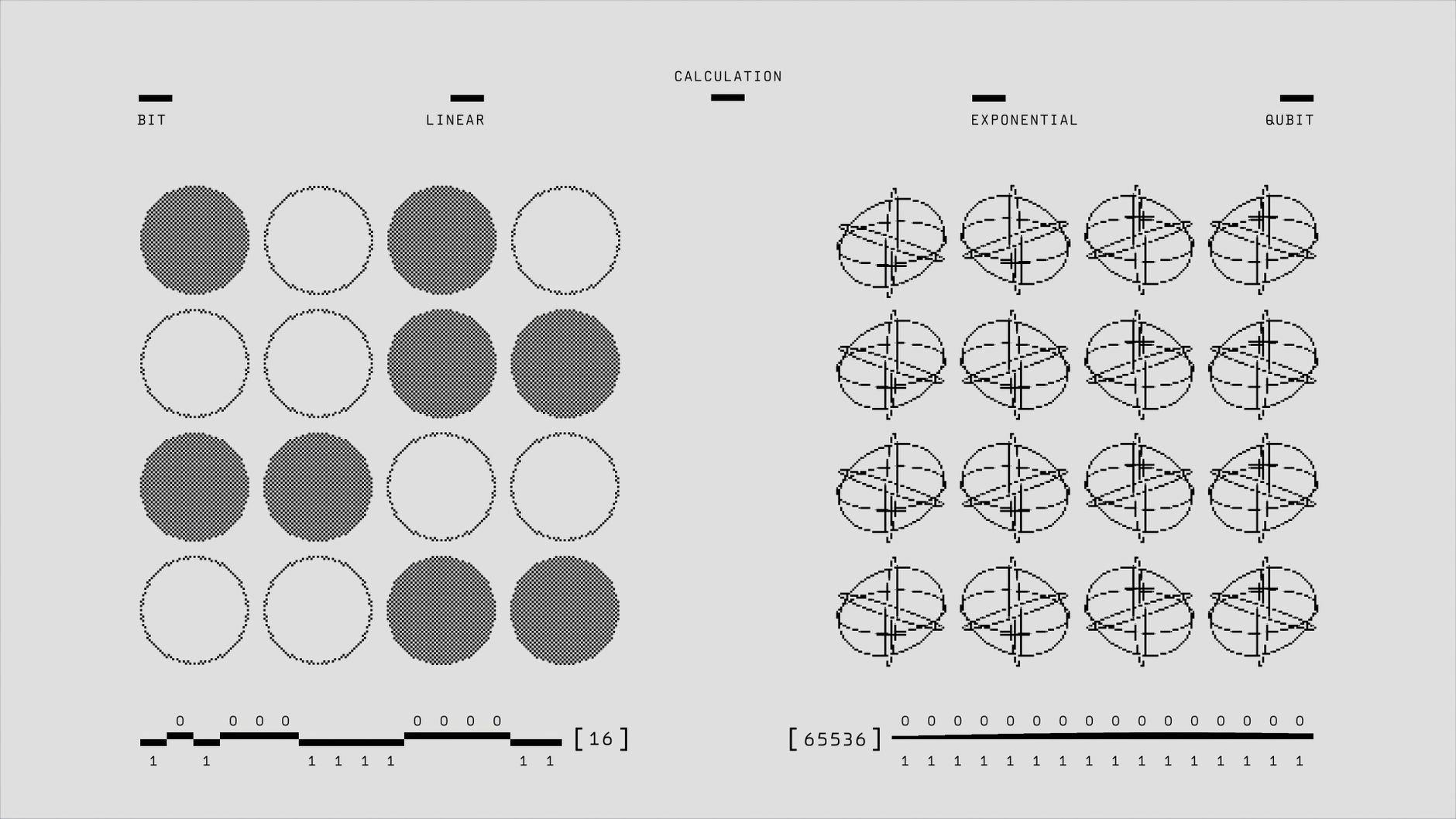
Scientists are exploring ways to make quantum computers more powerful and efficient, and a new study shows how artificial intelligence, specifically large language models (LLMs), can help design better quantum circuits—the building blocks of quantum algorithms. This research is important because quantum computers promise to solve certain problems much faster than classical computers, but creating efficient quantum algorithms remains a major hurdle. The new approach uses AI to propose innovative circuit designs that improve performance while using fewer resources, potentially accelerating progress toward practical quantum advantages.
Key Takeaways
- The researchers developed a system where AI models suggest quantum circuit designs, which are then independently evaluated and scored for efficiency and correctness.
- Applying this method to eight different quantum computing tasks, the AI-discovered circuits reduced key resource demands—such as the number of Toffoli gates and qubits—in seven of those tasks compared to previous best-known designs.
- For the eighth task, the AI helped uncover a novel reversible circuit architecture for modular inversion, a critical operation in number theory and cryptography, improving how classical algorithms can run on quantum hardware.
- This work demonstrates how AI and evaluator-guided search can co-design new quantum algorithms that better handle the unique constraints of quantum computing, like reversibility.
Quantum circuits are like the instruction sets for quantum computers, telling them how to manipulate qubits—the quantum equivalent of bits—to perform calculations. However, designing these circuits is challenging because quantum operations must be reversible (meaning no information is lost), unlike most classical computing steps. This reversibility requirement makes it tricky to translate efficient classical algorithms directly into quantum ones. Moreover, quantum hardware is still limited, so minimizing the number of qubits and complex gates like Toffoli gates (a type of three-qubit logic gate essential for many quantum algorithms) is crucial.
In this study, the researchers created an evolutionary framework that leverages LLMs—AI systems trained on vast amounts of text data—to propose candidate quantum circuit designs. These proposals are then tested and scored by an independent evaluator that checks if the circuit performs the intended function and measures resource costs such as gate and qubit counts. The best-performing designs are iteratively refined through this process, combining the creativity of AI with rigorous verification.
The team applied their framework across diverse quantum computing problems, including numerical calculations, chemical simulations, optimization tasks, and number theory challenges. Impressively, the AI-designed circuits often outperformed human-crafted state-of-the-art designs by using fewer Toffoli gates and qubits, which translates to more efficient and potentially faster quantum computations. One standout result was the discovery of a new reversible architecture for prime-field modular inversion, an operation important for cryptography. By rethinking how reversibility is handled, this new design revived a classical algorithm called divsteps, making it practical for quantum use and improving the trade-off between gate complexity and qubit usage.
These findings highlight how combining AI with expert evaluation can uncover novel algorithmic structures tailored for quantum computers’ unique needs. While quantum hardware is still maturing, more efficient circuits reduce the demands on future devices, bringing us closer to realizing quantum advantage—where quantum computers solve problems beyond classical reach. Moving forward, this AI-driven approach could accelerate the discovery of new quantum algorithms, helping researchers tackle even more complex tasks and optimize hardware utilization.
Based on research published on arXiv by Andi Gu, Alek H. Kemeny, Susanne F. Yelin et al..