
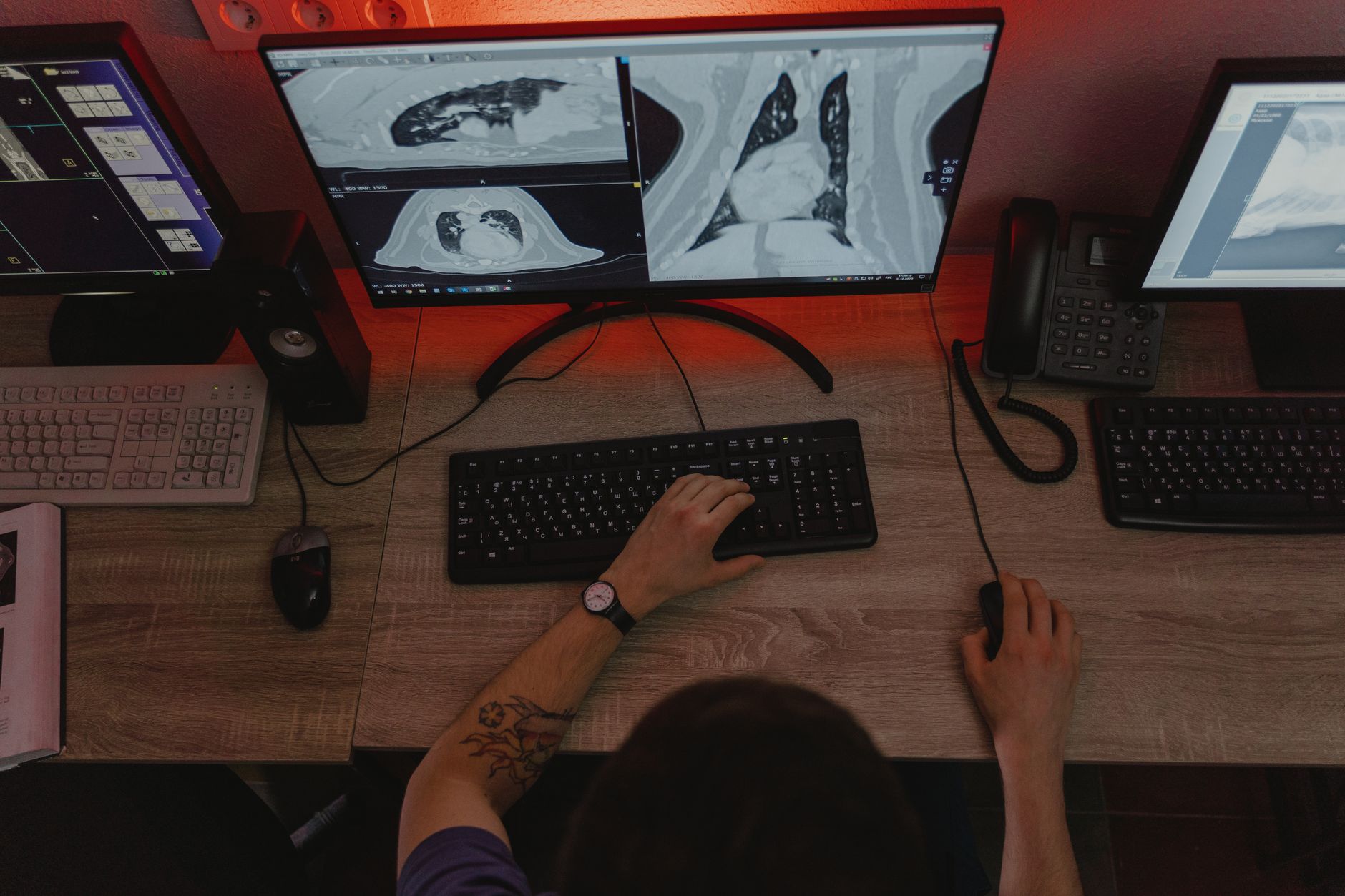
Scientists in the life sciences rely heavily on interpreting complex visual data—like gel blots, microscopy images, and flow cytometry plots—to make important research decisions. A newly published research paper introduces VIALS, a benchmark designed to test how well artificial intelligence (AI) can understand these kinds of scientific images. The study reveals that while current AI models excel at describing everyday photos, they fall short when it comes to accurately interpreting specialized scientific visuals. This gap highlights a major challenge for deploying AI tools in professional biotech and research settings.
Key Takeaways
- VIALS is a new benchmark featuring 161 visual question-answering tasks based on real scientific images used in life sciences workflows.
- State-of-the-art vision-language AI models, which link images with text, struggle to correctly interpret these scientific artifacts.
- Scientists with relevant expertise find these interpretation tasks straightforward, underscoring the domain-specific knowledge required.
- Current AI limitations suggest that without improved understanding of scientific visuals, AI will have limited use in professional life sciences research.
To create VIALS, the researchers collected a diverse set of images that scientists commonly encounter during lab experiments and data analysis—not just polished figures from textbooks or published papers. These include gel electrophoresis blots used to detect DNA fragments, detailed microscopy images showing cellular structures, plasmid maps that outline genetic constructs, and flow cytometry plots that analyze cell populations. Each image is paired with carefully designed questions that require interpretation beyond simple description, such as identifying specific bands on a gel or interpreting patterns in cell data.
The team tested leading vision-language models, which combine image recognition with natural language processing to answer questions about pictures. While these models can generate fluent, descriptive captions for everyday scenes, they often failed to give accurate or meaningful answers to the scientific questions posed by VIALS. This suggests that such AI systems lack the specialized domain knowledge and reasoning skills needed to understand the technical details embedded in scientific visuals.
Vision-language models typically learn from large datasets of common images and associated text, like photos of animals, objects, or landscapes. However, scientific images have unique visual features and require understanding of experimental context and technical terminology. The VIALS benchmark highlights how current AI systems are not yet equipped to bridge this gap, making them less useful for scientists who rely on precise interpretation of experimental data to guide their work.
Looking ahead, the researchers hope that VIALS will serve as a valuable tool for developing and evaluating AI models specifically tailored to life sciences applications. Improving AI’s ability to interpret scientific images could enhance research productivity, help automate routine data analysis, and support better decision-making in biotech and medical fields. However, the paper also reminds us that significant challenges remain before AI can match the nuanced understanding that human experts bring to interpreting complex scientific visuals.
Based on research published on arXiv by Elaine Lau, Thanuka Udumulla, Lee Izhaki-Tavor et al..