
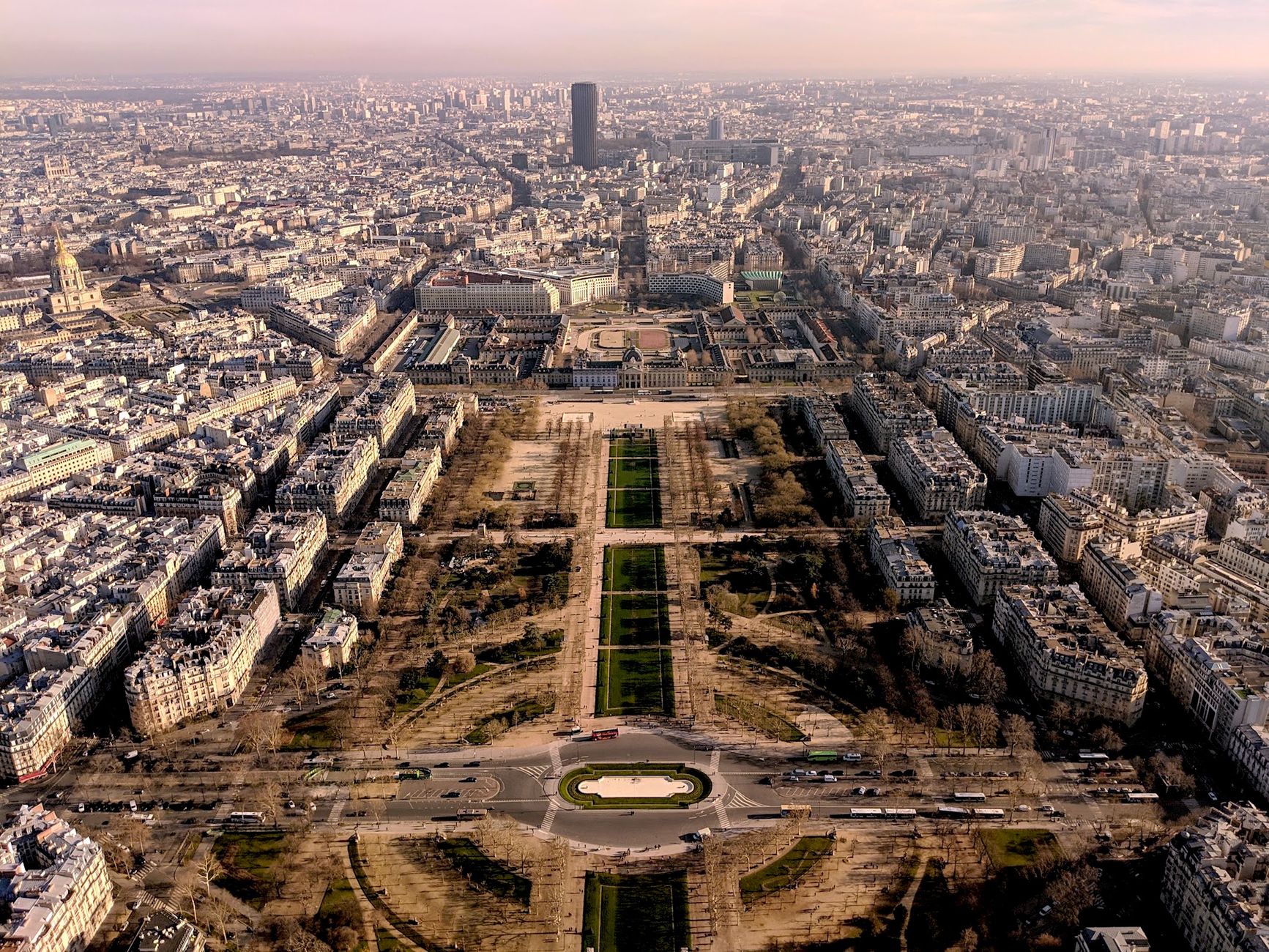
The streets of Paris are preparing for an extraordinary gathering as Pope Leo XIV embarks on a four-day visit to France, culminating in a massive Mass expected to draw over half a million worshippers. This event marks a significant moment not only for the Catholic Church but also for a nation grappling with its secular identity and a continent witnessing a subtle revival of spiritual interest.
A Mass Like No Other: The Heart of the Pope’s Paris Visit
The centerpiece of Pope Leo XIV’s visit will be a grand Mass held on the afternoon of Saturday at Place de la Concorde, with crowds anticipated to stretch along the Champs-Élysées all the way to the Arc de Triomphe and beyond. Authorities expect around 600,000 faithful to attend, making it one of the largest religious gatherings in Paris in recent memory. To accommodate this, a massive altar has been constructed, and significant security measures, including road closures and police presence, have been put in place.
This Mass is more than a religious service; it is a vivid demonstration of the enduring, if complex, relationship between France and Catholicism. Despite decades of secularization, the sheer scale of attendance reveals a persistent spiritual hunger among many French citizens and Europeans alike. The Church sees this as evidence of a renewed quest for meaning and values in an increasingly fragmented world.
Political and Social Undercurrents: Macron’s Delicate Balancing Act
President Emmanuel Macron will personally welcome the Pope at Orly Airport and host him at the Élysée Palace for discussions on pressing global issues, including geopolitics and the rapidly evolving realm of artificial intelligence. Yet, Macron will notably abstain from attending any of the Masses, a decision rooted in France’s strict secular principles that separate church and state.
Instead, his wife Brigitte Macron and Prime Minister Sébastien Lecornu will represent the French government at the major religious events. The visit also draws political figures across the spectrum, from far-right leader Marine Le Pen to centrists Edouard Philippe and Gabriel Attal, highlighting the event’s national significance beyond purely religious lines.
Behind the scenes, there have been reports of friction between Macron’s team and the Vatican’s delegation regarding the ceremonial nature of the visit. While the French president reportedly sought a more elaborate pageantry, Vatican officials maintained a focus on spiritual rather than pompous displays, underscoring differing expectations about the role of religion in public life.
From Paris to Lourdes and Metz: A Journey Through French Catholic Heritage
Beyond Paris, Pope Leo XIV’s itinerary includes visits to Lourdes, the renowned pilgrimage site in the Pyrenees, and Metz in northeastern France. Lourdes will host a Mass expected to attract 150,000 attendees, many of whom come seeking healing and spiritual renewal. Here, the Pope will also meet victims of sexual abuse by clergy, signaling the Church’s ongoing reckoning with past scandals.
In Metz, the Pope will honor Robert Schuman, a key architect of European unity and a devout Catholic whose cause for beatification is underway. This stop symbolizes the intertwining of faith and European identity, a reminder of the Church’s historical influence on the continent’s political and cultural development.
France’s Complex Catholic Legacy and a Modern Spiritual Revival
France’s identity as the “Eldest Daughter of the Church” is steeped in history, yet the nation today is markedly secular. Less than half of the population identifies as Catholic, and regular church attendance has plummeted from 35% in 1960 to under 5% today. The priesthood has also seen a dramatic decline, with numbers shrinking by two-thirds since 1990.
Despite these trends, recent years have witnessed a surprising resurgence of interest in religious traditions. Adult baptisms have more than doubled in just five years, reaching 10,000 in 2025. Cardinal François Bustillo of Ajaccio interprets this as a response to a spiritual void felt by many, who seek meaning beyond materialism and secular ideologies.
This spiritual curiosity often leads people beyond traditional Christianity, exploring philosophies and religions from India, Tibet, or the Amazon. Pope Leo XIV’s visit, therefore, is viewed by some Church leaders as an opportunity to reconnect the French with their religious heritage, offering a reminder of their roots in a time of widespread existential searching.
The Pope’s Personal Connection and Symbolism for Europe
Born Robert Prevost in Chicago, Pope Leo XIV has French ancestry through his grandmother from Normandy, a detail that resonates symbolically during his French visit. His presence in Paris, Lourdes, and Metz is not only a pastoral mission but also a bridge linking the Church’s global leadership with its European heritage.
Previous pontiffs like John Paul II and Pope Francis have visited France multiple times, though often avoiding Paris itself. Pope Leo XIV’s choice to center much of his visit in the French capital underscores a renewed focus on engaging with the heart of French culture and spirituality.
As Europe faces challenges ranging from political fragmentation to social alienation, the Pope’s visit serves as a moment of reflection on values, community, and faith. It is a reminder that beneath the secular surface, questions of meaning and transcendence continue to animate millions.
In the coming days, as Paris fills with pilgrims and the Pope’s words echo through historic avenues, France will witness a rare convergence of faith, politics, and culture. Whether this visit sparks a lasting spiritual revival remains to be seen, but it undeniably highlights the enduring relevance of religion in the public imagination.
Recommended reading
For more context, see related Peack News coverage and explainers linked below.