
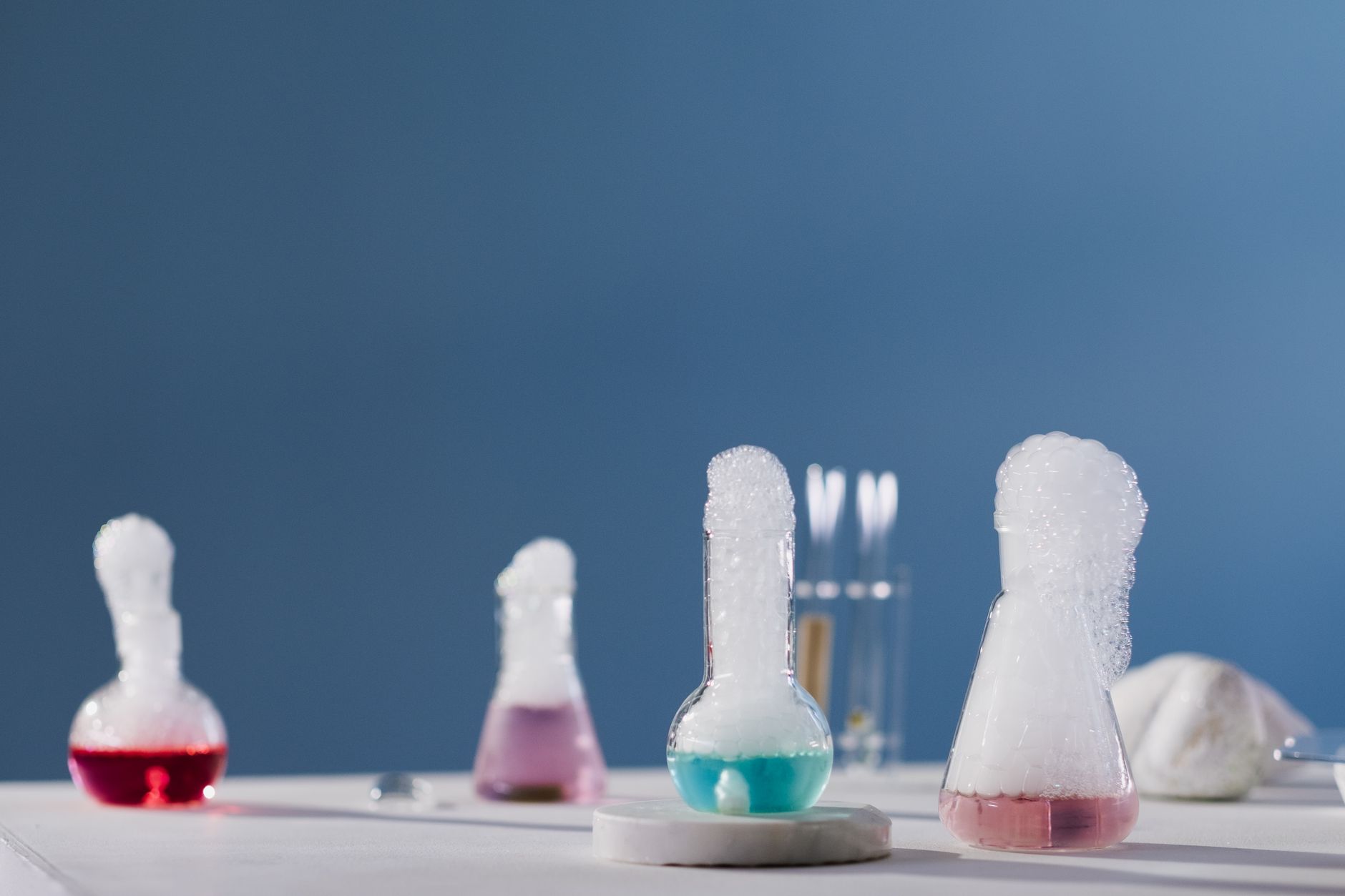
Chemical reactions are the foundation of countless processes—from creating medicines to manufacturing materials—but predicting exactly how molecules transform during these reactions remains a complex challenge. A newly published research paper introduces an innovative AI approach that models chemical reactions by focusing directly on electron rearrangements, offering a more detailed and mechanistic understanding of how molecules change. This advancement could improve the accuracy and interpretability of reaction predictions, which is crucial for accelerating discoveries in chemistry and related fields.
Key Takeaways
- The new model, called MAELLE, predicts chemical reactions by simulating the movement of electrons rather than just changes in molecular structures.
- MAELLE uses a mathematical framework called Continuous-time Markov Chain to represent electron distributions and their transformations over time.
- The approach achieves competitive accuracy on a large benchmark dataset (USPTO-480K) and shows strong robustness when tested on more complex or different types of reactions.
- Unlike many existing models, MAELLE can generate detailed mechanistic pathways that align with known chemistry and even predict side products of reactions.
Traditional machine learning models for chemical reaction prediction often focus on generating the end products directly or making heuristic changes to molecular graphs—which represent atoms and their bonds. While effective to a degree, these methods typically overlook the fundamental role of electrons in driving chemical changes. Electrons move and rearrange during reactions, breaking and forming bonds in ways that determine the outcome. By modeling reactions at the electron level, researchers can gain a clearer, more mechanistic picture of the transformations occurring.
The team behind MAELLE developed a novel technique that treats electron arrangements as discrete states within a graph structure, incorporating all bonding, non-bonding, and hydrogen sites. They represent the process of going from reactants to products as a Continuous-time Markov Chain (CTMC), a mathematical model that describes transitions between states over continuous time. This allows the AI to simulate a sequence of electron rearrangements—essentially, “edit moves”—that transform the reactants into products step-by-step.
To generate these intermediate steps, the researchers applied a concept from mathematics called Optimal Transport, which helps find the most efficient way to move “mass” (in this case, electron occupation) from one configuration to another. This discrete flow matching approach enables MAELLE to create plausible mechanistic pathways without needing explicit annotations of elementary reaction steps, which are often difficult to obtain.
When tested on the USPTO-480K dataset, a large benchmark of chemical reactions, MAELLE performed on par with leading models in predicting reaction outcomes. More importantly, it maintained strong accuracy in challenging scenarios involving reactions with higher structural complexity or different reaction types—situations where many existing models tend to struggle. Additionally, because MAELLE’s predictions operate over full electron redistributions, it naturally provides mechanistic trajectories that agree with chemical intuition and can anticipate side products, offering valuable insights beyond just the main reaction products.
This research marks an important step toward AI models that not only predict what chemical reactions will produce but also explain how they happen at a fundamental electron level. Such mechanistic insight can aid chemists in designing new reactions, understanding unexpected results, or discovering novel compounds. Future work may focus on further refining these models, expanding their applicability to a wider range of chemical systems, and integrating them into practical tools for researchers and industry professionals.
Based on research published on arXiv by Nguyen Xuan-Vu, Octavian Susanu, Daniel Armstrong et al..