
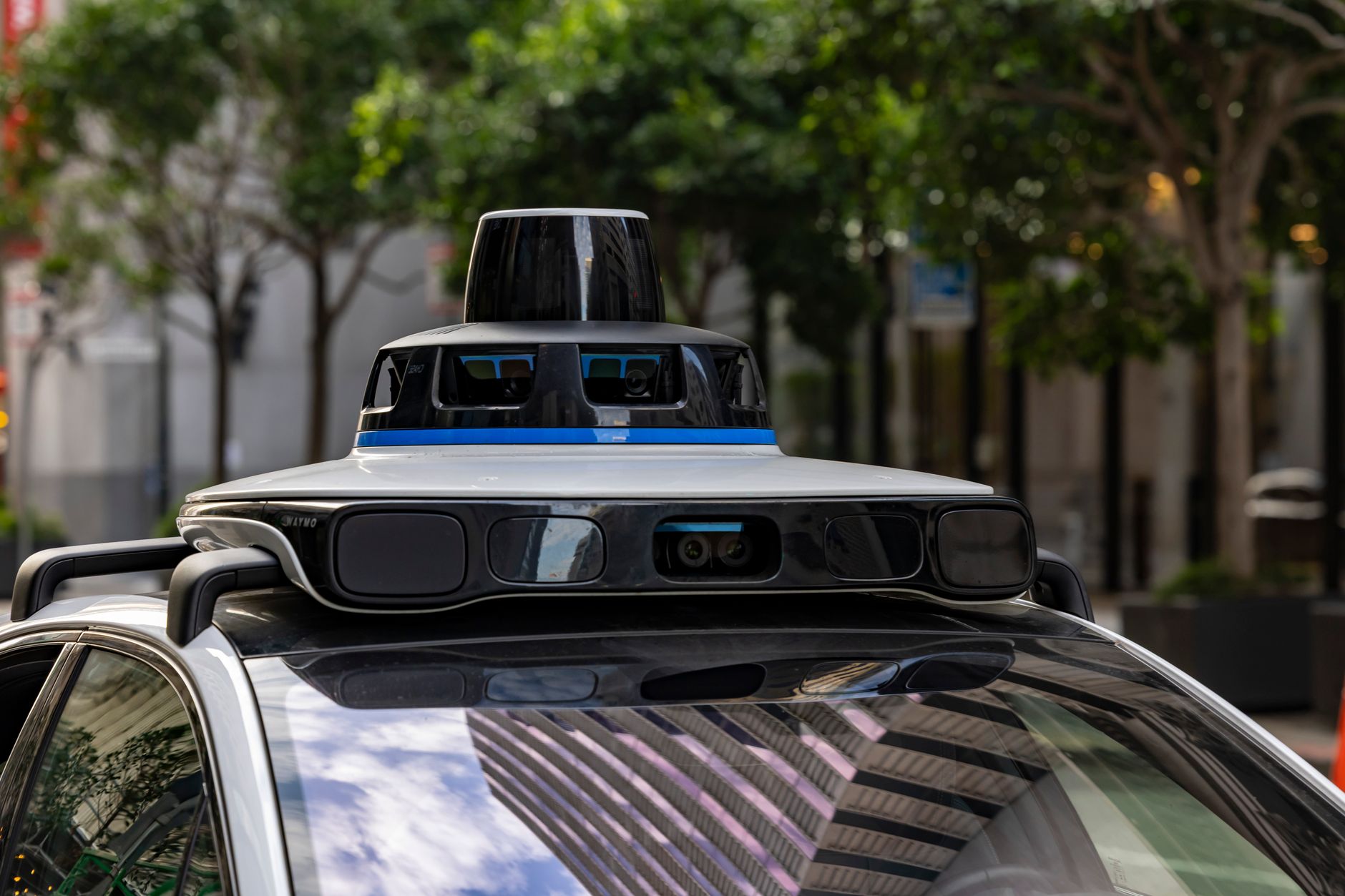
Researchers have developed a new artificial intelligence (AI) system that allows self-driving cars to navigate complex, unstructured environments—such as off-road tracks—without any human intervention. This breakthrough tackles one of the biggest challenges in autonomous driving: transferring skills learned in computer simulations to the real world, especially when the environment is unpredictable and varied. The new approach, called MILER, uses a novel way to represent driving scenes and control decisions, enabling vehicles to drive safely in difficult conditions without prior real-world training.
Key Takeaways
- MILER is an AI framework that trains autonomous driving policies entirely in simulation and successfully applies them directly in the real world without additional training (zero-shot sim-to-real transfer).
- The system uses a “semantic mid-level representation” to create a common understanding of the environment, combining camera and LiDAR data into a bird’s-eye-view map for both simulation and real driving.
- Instead of sending raw control commands straight to the vehicle, MILER aligns planned trajectories to ensure smooth and safe execution on real cars.
- In tests, MILER drove over 17 kilometers on a challenging 3-kilometer off-road track with obstacles and sharp turns, at speeds up to 33.6 km/h, using two different vehicles—all without human input.
Autonomous driving systems often rely on reinforcement learning, a type of AI training where a computer learns by trial and error to make decisions that maximize a reward—in this case, safe and efficient driving. However, training such systems directly on real roads is risky and expensive. Instead, researchers use simulations to teach the AI, then try to transfer that knowledge to real vehicles. This “sim-to-real” transfer is especially difficult in unstructured environments, like off-road trails, because the real world is far more complex and unpredictable than any simulation.
The team behind MILER addressed this gap by creating a special kind of representation for the environment, called a semantic mid-level representation (MLR). Think of it as a simplified but meaningful map that highlights important features like obstacles, road edges, and free space, rather than raw sensor data. During training, the AI learns driving policies using this representation inside a simulator that mimics unstructured environments. When deployed on a real car, the system uses BEVFusion, a technology that fuses camera and LiDAR sensor inputs to produce a matching bird’s-eye-view semantic map. This consistency between simulated and real-world data helps the AI apply what it learned directly to the real vehicle.
Another key innovation is the trajectory-alignment strategy. Instead of sending direct control signals (like steering angles or throttle) from the AI to the car—which might behave differently in the real world—the system plans a path or trajectory for the vehicle to follow. This approach allows the car to adjust its movements smoothly and safely, compensating for differences between the simulated model and the actual vehicle dynamics.
The researchers tested MILER on a demanding 3-kilometer off-road track filled with obstacles, tight hairpin turns, and varying terrain. The system drove two different vehicles over a combined distance of 17.3 kilometers at speeds reaching 33.6 km/h, all without any human intervention. Impressively, the entire AI software ran on an Nvidia Jetson AGX Orin, a compact onboard computer suitable for real-world deployment.
This new research, published recently on arXiv, marks an important step toward making autonomous vehicles more adaptable and reliable in complex, real-world conditions beyond well-mapped urban streets. While further testing and refinement are needed before widespread use, MILER’s approach could help accelerate the development of self-driving cars capable of handling diverse environments—from rural roads to off-road exploration—without extensive manual tuning or retraining. Future work may explore scaling this framework to more varied settings and integrating additional sensor types to improve robustness even further.
Based on research published on arXiv by Thomas Steinecker, Denis Trescher, Alexander Bienemann et al..