
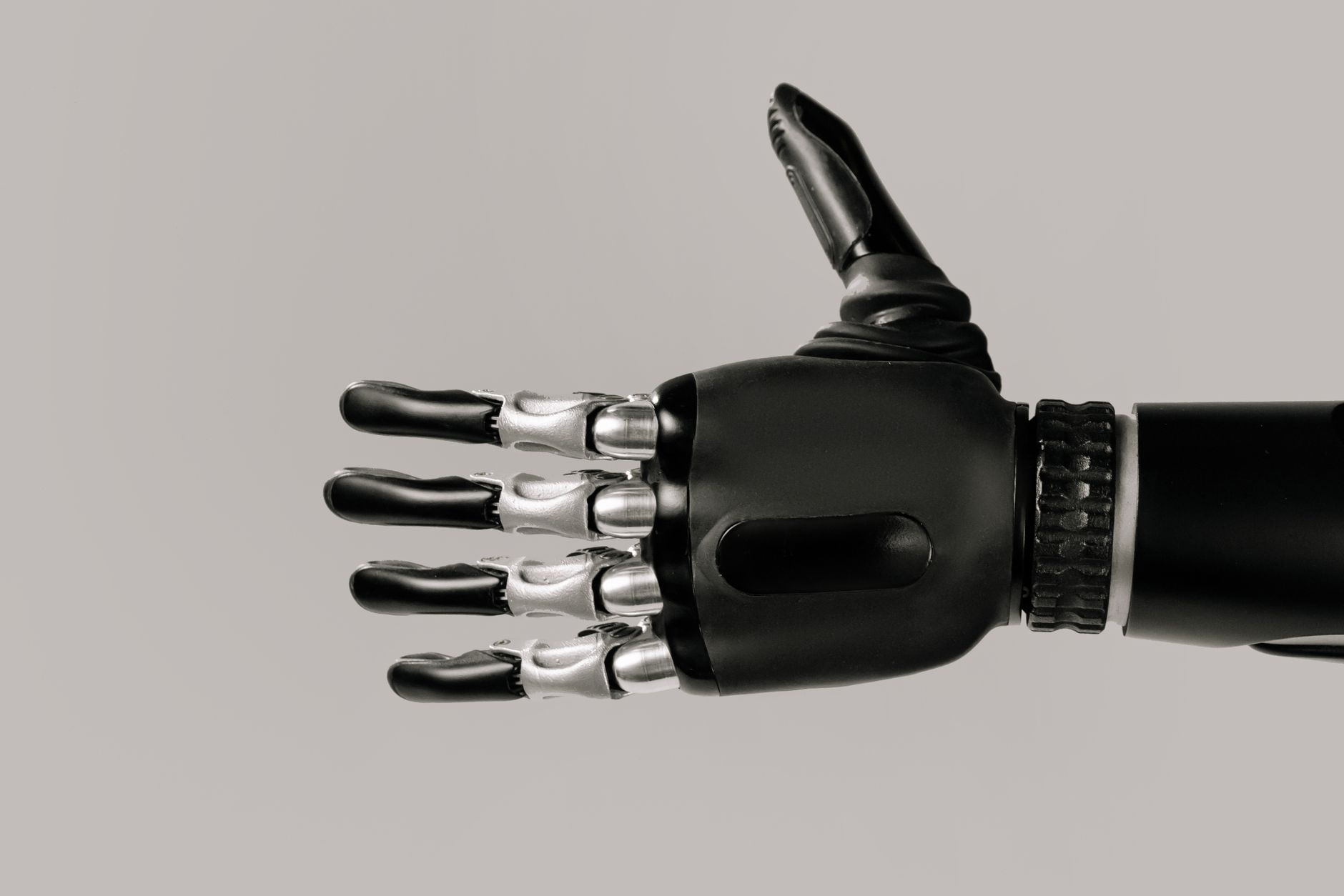
Teaching robots to handle objects with human-like dexterity has long been a major challenge in robotics. A new study introduces a promising approach that allows robots to learn complex hand movements by first observing short videos of humans “playing” with objects, and then practicing autonomously to improve their skills. This method could make it easier for robots to perform delicate tasks such as manipulating tools or assembling small parts, without requiring extensive programming or task-specific training.
Key Takeaways
- The researchers developed a framework called DSP (Dexterity from Supervised Play) that enables robots to learn hand manipulation from a few minutes of human demonstration.
- After initial learning, the robot practices on its own, collecting hours of experience to build an internal “world model” of how objects respond to its actions.
- DSP uses this world model to plan and predict the outcomes of potential movements, improving the robot’s ability to perform complex tasks.
- In real-world tests, DSP outperformed traditional imitation learning by nearly 70% in success rate and matched reinforcement learning results using 490 times less data.
The core idea behind the DSP framework is to leverage short, unstructured human demonstrations—essentially videos of a person playing with objects—to teach a robot basic manipulation skills. The robot first uses behavior cloning, a technique where it mimics the human actions frame-by-frame, to learn a “play policy.” This policy allows the robot to generate actions that resemble human play.
Once the robot has this initial skill, it can practice on its own, exploring how objects respond to different manipulations. During this autonomous play, it collects extensive data, which it uses to train a “world model.” This model is a kind of internal simulation that predicts what will happen when the robot takes certain actions. With this predictive ability, the robot can plan multiple action sequences ahead of time and choose the best one to achieve a desired goal.
To make the planning process faster and more efficient, the researchers also introduced a way for the robot to refine its policy through “self-play” within the learned world model. This means the robot simulates playing with objects internally, improving its skills without needing additional real-world trials. The final result is a closed-loop, goal-conditioned policy that can adapt its movements to a wide range of manipulation tasks.
The research team tested DSP on tasks involving pushing objects and reorienting them within a robot’s multi-fingered hand, both in computer simulations and real-world experiments. Notably, the system achieved a significantly higher success rate than hindsight behavior cloning—a common imitation learning baseline—and reached comparable performance to reinforcement learning methods that typically require enormous amounts of trial-and-error data.
These findings highlight the potential of using short human demonstrations combined with autonomous practice to efficiently teach robots complex dexterous skills. By reducing the need for extensive task-specific programming or large datasets, DSP could accelerate the development of robots capable of delicate manipulation in manufacturing, healthcare, and service industries. Future work may explore applying this approach to even more complex tasks and different types of robots, bringing us closer to machines that can learn and adapt through natural interaction with their environment.
Based on research published on arXiv by Botao He, Yiming Dou, Yiannis Aloimonos et al..