
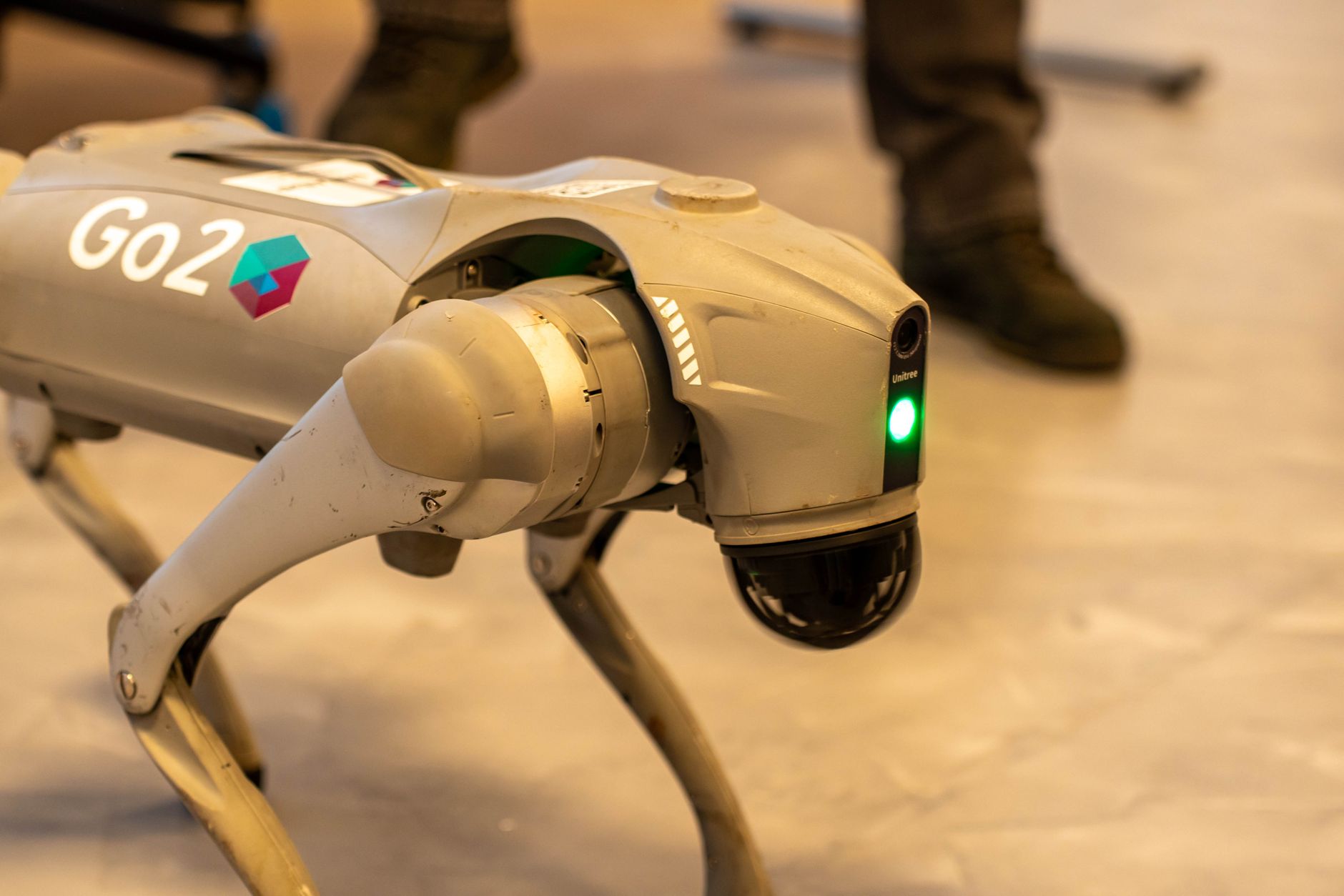
Robots operating in the real world often face unexpected challenges and failures that weren’t covered during their initial training. A new research paper explores a way for robots to improve their own performance autonomously, without needing humans to step in and demonstrate fixes for every problem. This approach could help robots adapt more efficiently to new tasks and environments, making them more reliable and useful over time.
Key Takeaways
- The researchers developed a method called “skill-space shooting” that helps robots explore and learn from repeated short behaviors, or “skills,” to correct their mistakes.
- These skills are reusable actions that occur across many tasks, allowing the robot to apply what it learns in one situation to others.
- By leveraging large foundation models, the system guides the robot in selecting and combining these skills to improve its task performance autonomously.
- Real-world tests showed the robot’s policy—its decision-making strategy—improved repeatedly without human demonstrations, and skill sharing reduced the need for new teaching when facing different tasks.
To understand the approach, it helps to know what “skills” and “foundation models” mean in this context. Skills are short, familiar behaviors that a robot can perform—like picking up an object, pushing something aside, or adjusting its grip. These are building blocks that can be combined to complete more complex tasks. Foundation models are large, pre-trained AI systems that have learned broad knowledge from vast amounts of data. They can reason about what actions might work in a given scene without task-specific training.
The researchers’ key insight was to use these foundation models to guide the robot in exploring different skill sequences when it encounters a failure. Instead of trying random corrections, the robot “shoots” through the space of possible skills—hence “skill-space shooting”—to find effective fixes. Successful attempts are then used as corrective supervision to update the robot’s policy, meaning the robot learns from its own trial and error. This approach turns skills into reusable corrections that help the robot improve not just on one task, but across multiple tasks.
The team validated their method with real-world experiments, showing that robots could repeatedly improve their policies autonomously. Importantly, the skill-based corrections can be shared between tasks, reducing the amount of new teaching a robot needs when learning something different. This makes the approach scalable and generalizable, addressing a major challenge in robotics: how to keep robots learning and adapting after deployment without constant human intervention.
While the research is still in early stages, this skill-space shooting method points toward robots that can self-correct and adapt more efficiently in dynamic environments. Future work may explore expanding the library of skills, improving the foundation models’ reasoning capabilities, and applying the approach to more diverse and complex real-world scenarios. Ultimately, this could lead to more autonomous robots that require less human oversight, making them more practical for everyday use in homes, factories, and beyond.
Based on research published on arXiv by Zihang Rui, Renhao Wang, Haoxu Huang et al..