
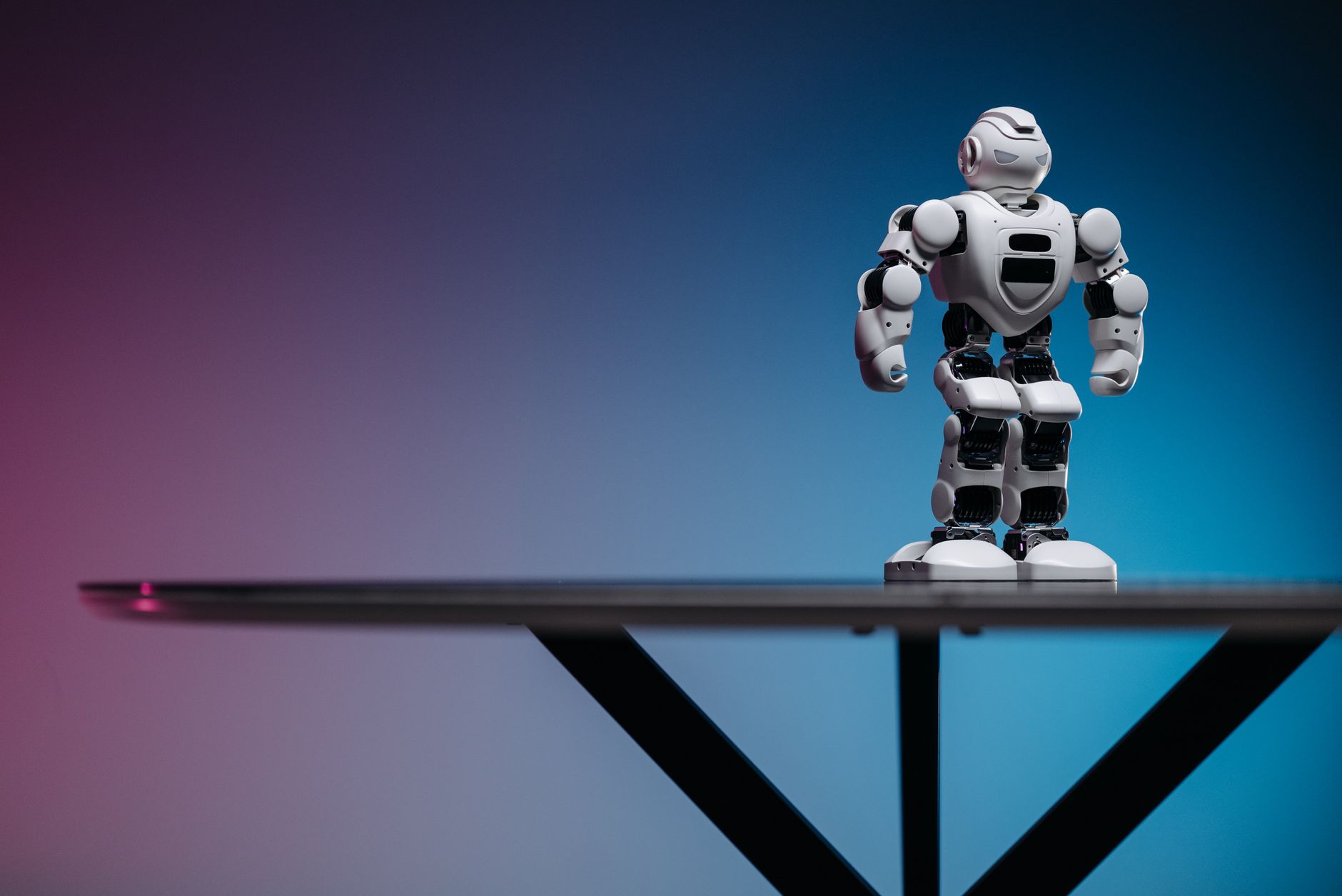
Imagine a robot that can understand and describe what it sees, remember instructions in words, and act on those instructions—all at the same time. New research from a team of AI scientists introduces UniWALM, a novel approach that combines video, action, and language into one unified system to improve how robots manipulate objects and remember tasks. This is important because current robots often treat vision, language, and action as separate problems, limiting their ability to perform complex, memory-dependent tasks in the real world.
Key Takeaways
- UniWALM integrates video, action, and language into a single shared AI model, enabling simultaneous processing and generation of all three.
- The system uses language not just to understand commands but also as a form of internal memory, improving the robot’s ability to handle tasks requiring recall.
- UniWALM’s new training method, called Flow Matching with Correction, helps the model recover from errors in action sequences without slowing down real-time decision-making.
- In tests, UniWALM outperformed existing models on both simulated pick-and-place tasks and real-world object-finding challenges, significantly increasing success rates.
At the heart of UniWALM is a “mixture-of-transformers” architecture—a type of AI model designed to handle multiple streams of information simultaneously. Unlike previous approaches that connect separate vision-language and action modules in stages, UniWALM processes video inputs, action commands, and language descriptions within one unified framework. This means the robot can generate a textual description of its current state or task while deciding what action to take next, all in a single pass.
One innovative aspect of the model is how it treats language as a “memory loop.” Instead of relying on an external planner or memory bank, UniWALM generates text that summarizes what it has done or needs to do, then feeds that text back into the model in the next step. This continuous cycle allows the robot to keep track of subtasks and recall previous information naturally, much like how humans use language to organize thoughts and actions.
To ensure the robot’s actions remain reliable despite the added complexity of generating language, the researchers introduced a new training technique called Flow Matching with Correction (FMC). This method teaches the model how to recover from small mistakes in its planned action sequences, improving robustness without adding extra computational cost during operation.
In practical tests, UniWALM demonstrated strong performance improvements. On a simulated compositional pick-and-place benchmark called MolmoSpaces, it consistently outperformed baseline models using the same core architecture. For tasks requiring memory, such as those in the RMBench suite, UniWALM achieved a success rate of 34.5% without any pretrained language or reasoning modules—surpassing other models that had access to more information. Most strikingly, in a real-world “Find-the-Item” task, UniWALM’s ability to generate and use textual memory increased success from just 11.1% to 61.1%, far outperforming state-of-the-art vision-language-action systems that hovered around chance levels.
These advances show that unifying perception, action, and language into a single AI model can help robots better understand and interact with the world in a more human-like way. The researchers’ approach reduces the need for separate planning modules and external memories, potentially simplifying robot design and improving adaptability. Going forward, this work opens new avenues for developing robots that can follow complex instructions, remember past events, and operate more autonomously in dynamic environments—from homes and warehouses to healthcare settings.
Based on research published on arXiv by Rahul Sajnani, Diego Romeres, Mingyuan Zhang et al..