
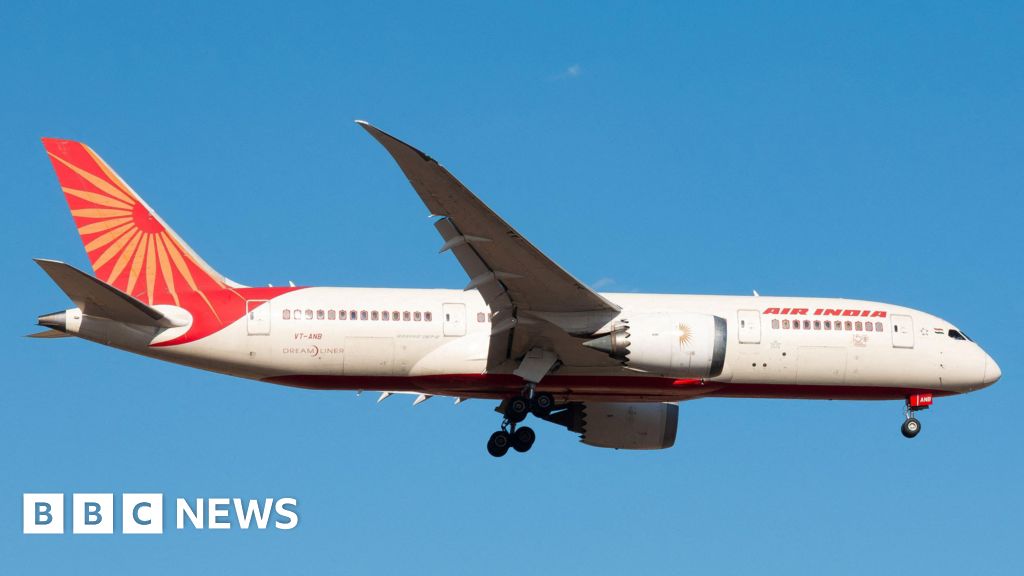
One year after the tragic crash of Air India Flight 171 shortly after takeoff from Ahmedabad, the investigation into the disaster remains mired in uncertainty. Despite the passage of twelve months and exhaustive efforts by India’s Aircraft Accident Investigation Bureau (AAIB), critical questions surrounding the sudden loss of both engines and the role of cockpit actions remain unresolved. The Boeing 787 Dreamliner, one of the most technologically advanced aircraft in service, inexplicably plunged to the ground within 32 seconds of departure, killing all 260 people on board and raising profound concerns about aviation safety and investigative transparency.
Why this matters
The unresolved nature of the Air India crash investigation is more than a technical puzzle—it strikes at the heart of public trust in aviation safety and regulatory oversight. Dual-engine failure on a modern airliner is extraordinarily rare, and when it occurs, it demands a clear, authoritative explanation to prevent future tragedies. The delay in delivering a conclusive report fuels speculation and controversy, complicating the grieving process for victims’ families and shaking confidence in an industry that prides itself on rigorous safety standards. Furthermore, the possibility of human error versus mechanical failure raises complex questions about pilot training, aircraft design, and the adequacy of maintenance protocols. Each unanswered question leaves the aviation community and the public grappling with uncertainty about how such a catastrophe could unfold in an era of advanced technology and stringent controls.
The enigma of the fuel-control switches
Central to the investigation is the puzzling movement of two cockpit fuel-control switches to the “cut-off” position immediately after takeoff, effectively starving both engines of fuel. These switches are designed with locking mechanisms to prevent accidental activation, typically only used before engine start, after landing, or during emergencies. The preliminary report revealed cockpit audio capturing a tense exchange: one pilot asked why the switches had been moved, and the other replied, “I did not.” The voices remain unidentified, and this cryptic interaction has sparked intense debate.
Experts argue that the likelihood of accidental switch movement is vanishingly small, with some estimating the odds at “one in a trillion.” This has led to theories ranging from deliberate action to a last-ditch attempt by the pilots to reset engine controls during an emergency. Some aviation analysts suggest the switches may have been moved as part of Boeing’s dual-engine failure memory procedure, aimed at relighting the engines. However, without definitive evidence, this remains speculative. The ambiguity surrounding these switches underscores the challenge investigators face in distinguishing between cause and effect in the moments before the crash.
Technical mysteries: engines, RAT deployment, and system glitches
Beyond the cockpit switches, the investigation grapples with several technical anomalies. Notably, the Ram Air Turbine (RAT), an emergency device that generates backup hydraulic power if both engines fail, reportedly deployed within five seconds after the fuel cutoff. Simulator tests suggest this process should take significantly longer—14 to 18 seconds—raising questions about whether the RAT engaged prematurely or if the engines had already lost power before investigators currently believe.
Another theory gaining traction involves a possible electrical fault that triggered a reboot of the aircraft’s flight computers. This hypothetical glitch could have caused the systems to mistakenly believe the plane was still on the ground, prompting an automatic shutdown of engine fuel supply as a protective measure. Such a scenario would mean the cockpit switches were never physically moved, and the recorded “cut-off” was a digital command rather than mechanical action. This hypothesis challenges the preliminary report’s focus on human factors and points to the need for deeper scrutiny of the aircraft’s complex avionics and software systems.
Stakeholders and the politics of investigation
The investigation’s delay and the contentious interpretations of preliminary findings highlight the intricate web of interests involved. Families of the victims seek answers and accountability, while pilot unions defend the reputations of their members against allegations of deliberate wrongdoing. The airline and Indian authorities, meanwhile, have a vested interest in maintaining confidence in the safety of India’s aviation sector. This confluence of pressures risks politicizing what should be a purely technical inquiry, potentially compromising the objectivity and public trust in the final outcome.
Experts caution that speculation and premature conclusions could hinder the investigative process. Transparency and patience remain crucial as authorities continue to analyze flight data recorders, maintenance logs, and human factors. The investigation’s complexity is a reminder that aviation disasters rarely have simple explanations, especially when cutting-edge technology and human factors intertwine.
Looking ahead: the path to closure
As the second anniversary of the Air India Flight 171 tragedy approaches, the hope remains that the AAIB will soon deliver a comprehensive report clarifying the sequence of events that led to the crash. Key to this will be a detailed analysis of engine performance data, the timing of switch movements, and the full cockpit voice recorder transcript. Only by piecing together these elements can investigators differentiate between accidental mechanical failure, pilot error, or systemic issues within the aircraft’s design or maintenance.
The outcome will have far-reaching implications—not only for Air India and the families affected but for the global aviation community. Lessons learned could influence future aircraft design, pilot training protocols, and emergency procedures, ultimately enhancing safety standards worldwide. Until then, the unresolved questions serve as a sobering reminder of the fragility of human and machine systems operating at the edge of modern technology.