
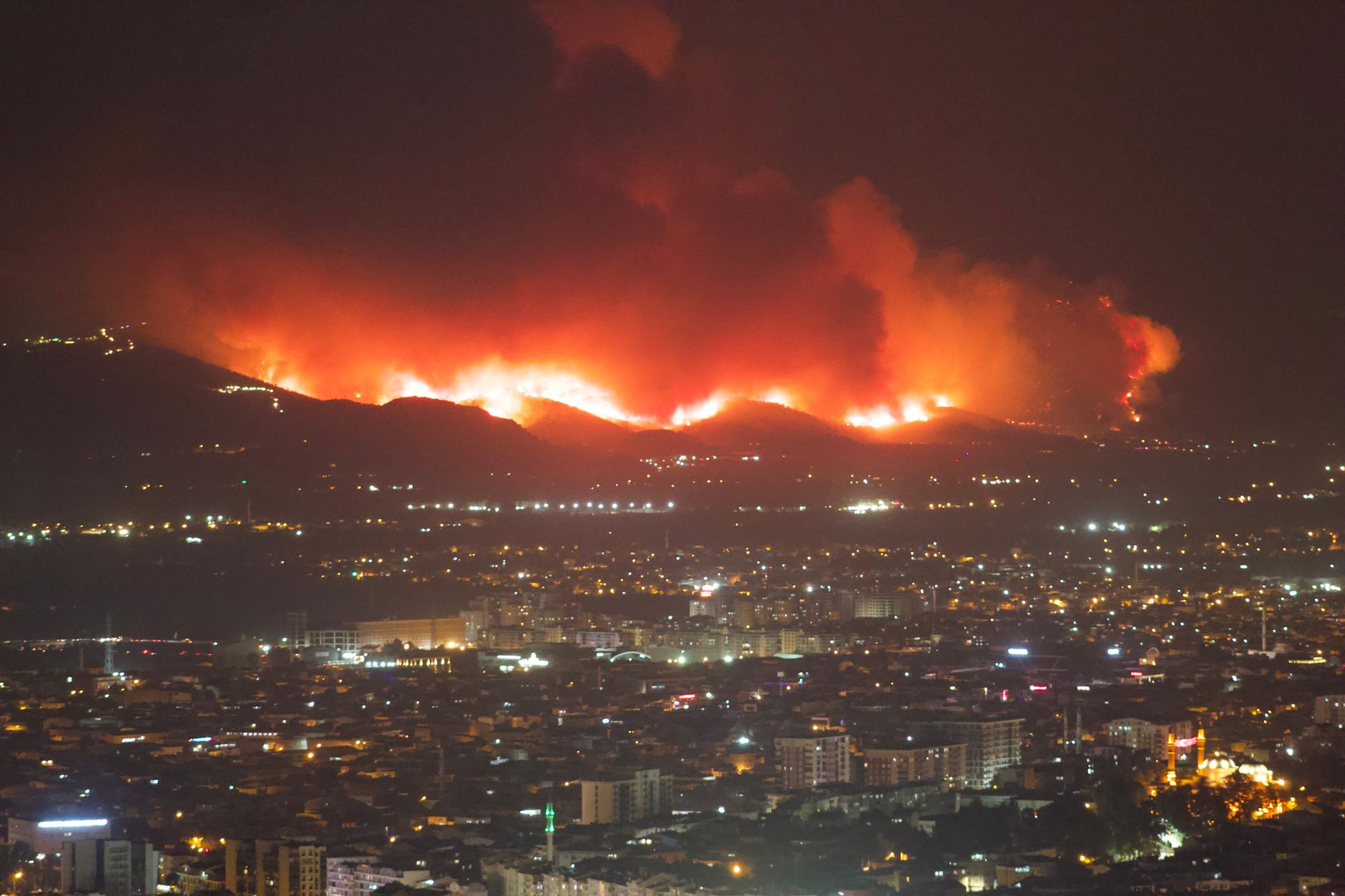
A ferocious wildfire near Croatia’s Adriatic coast has left at least one dead, dozens injured, and forced thousands to flee their homes, marking one of the most devastating natural disasters in the country’s recent history. The blaze, which erupted near the village of Lokva Rogoznica and rapidly engulfed the popular tourist town of Omis, has ravaged vast swaths of forest and residential areas, highlighting the growing threat of wildfires in southern Europe amid escalating climate pressures.
Rapid Spread and Intense Destruction Along the Coastline
The fire ignited late Thursday evening and, driven by gale-force winds, spread with alarming speed across pine-covered hillsides towards Omis, a town just 6 kilometers away. Within hours, the inferno consumed approximately 1,000 hectares of land, leaving behind charred homes, vehicles, and devastated landscapes. Croatian fire chief Slavko Tucakovic described the blaze as “one of the worst” the nation has ever faced, emphasizing the unprecedented speed and intensity with which it moved.
Emergency crews battled the flames overnight, with over 300 firefighters deployed to contain the disaster. Despite their efforts, the ferocity of the fire forced some units to retreat temporarily, complicating rescue and containment operations. Eyewitness footage captured scenes of thick smoke and towering flames turning the sky a fiery red, while some residents and tourists were forced to escape by jumping into the sea from boats to avoid the advancing fire.
Human Toll and Evacuations Amidst a Climate Crisis
Authorities confirmed that one person has died and around 40 others sustained injuries, with ten individuals in intensive care. The scale of the evacuation was significant: approximately 1,200 residents and tourists were moved to safety in emergency shelters set up across several coastal towns. The fire’s impact on local communities, many dependent on tourism, raises concerns about both immediate humanitarian needs and longer-term economic repercussions.
Prime Minister Andrej Plenkovic visited the affected region on Friday, praising the heroic work of firefighters who managed to save numerous properties despite the blaze’s rapid advance. He described the situation as a “miracle” given the extreme conditions, underscoring the extraordinary challenges faced by emergency responders.
Wildfires Across Europe Reflect a Worsening Pattern
Croatia’s wildfire is part of a broader pattern of destructive fires sweeping through Europe this summer, fueled by record-breaking heatwaves and prolonged drought. Neighboring countries like Greece have also seen large-scale evacuations, with more than 200 people fleeing by boat from a beach resort as flames consumed nearby forests. Germany, France, and the UK have similarly confronted severe fires, straining firefighting resources and prompting emergency alerts.
This surge in wildfire activity is a stark reminder of the growing vulnerability of Europe’s landscapes and communities to climate change. The combination of extreme temperatures, dry vegetation, and strong winds creates a hazardous environment where fires can ignite and spread rapidly, overwhelming traditional containment methods.
Looking Ahead: Preparedness and Resilience in a Changing Climate
The Croatian wildfire near Omis highlights the urgent need for enhanced wildfire preparedness, improved emergency response coordination, and robust climate adaptation strategies. As extreme weather events become more frequent and severe, governments and communities must invest in both preventative measures and rapid response capabilities to mitigate future disasters.
Moreover, the economic and social impacts of such wildfires require comprehensive recovery plans that address not only rebuilding infrastructure but also supporting affected populations and preserving natural ecosystems. Croatia’s experience serves as a warning to other nations about the escalating risks posed by climate change and the critical importance of resilience in the face of environmental crises.
Recommended reading
For more context, see related Peack News coverage and explainers linked below.
- US Aircraft Carrier at Sea Over 250 Days Sparks Concerns About Conditions
- Palestinians ordered to evacuate homes in village surrounded by Israeli settlers
- Romania closes sole nuclear plant due to Danube River’s low water levels from heat
- Explainer: Major Cybersecurity Threats in 2026
- Explainer: US-China Tech Competition