
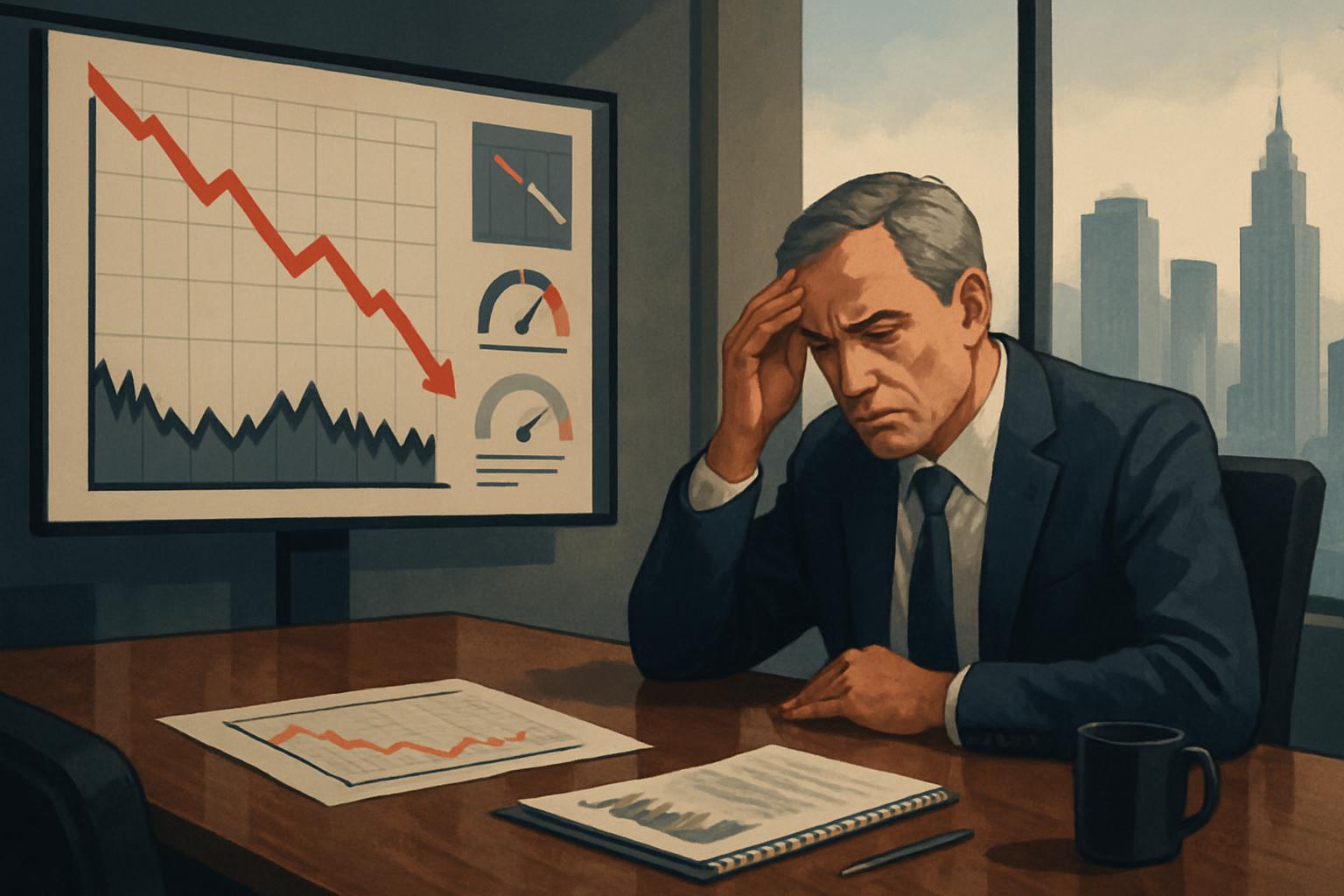
Warning Signs of a Fresh Financial Crisis
Several warning lights are flashing on the global economic dashboard, prompting concerns that a fresh financial crisis may be emerging. While the situation shares some similarities with the 2008 crisis, experts emphasize that the next crisis is unlikely to unfold in the same way.
The 2008 financial crisis was marked by the collapse of Lehman Brothers and a widespread credit crunch that led to a deep global recession. Today, new vulnerabilities have appeared, particularly in the rapidly growing private credit market, which has expanded to around $2.5 trillion over the past two decades.
Private Credit and Financial Stability Risks
Private credit funds, which provide loans outside traditional banking systems, have recently faced significant investor withdrawals. Firms such as BlackRock, Blackstone, Apollo, and Blue Owl have restricted redemptions amid demands for billions of dollars in withdrawals. This has raised concerns among regulators and financial experts about the stability of this sector.
Sarah Breeden, deputy governor of the Bank of England responsible for financial stability, notes that private credit involves high leverage, opacity, and complex interconnections with the broader financial system. She warns of “leverage on leverage on leverage,” which could amplify losses if the market turns turbulent.
Mohammed El-Erian, chief economic adviser to Allianz, highlights that the rise of private credit partly stems from stricter banking regulations post-2008, which pushed lending activities outside traditional banks. He cautions that if many lenders demand their money back simultaneously, it could trigger instability that harms the wider economy.
However, Larry Fink, CEO of BlackRock, disputes the notion that private credit poses a systemic threat, emphasizing that the issues affect only a small fraction of the market and asserting that financial institutions today are more secure than in 2008.
Other Economic Risks and Comparisons to 2008
Energy prices are another area of concern. In 2008, oil prices surged dramatically, contributing to economic stress. Currently, Brent crude oil prices have risen above $100 a barrel amid geopolitical tensions, particularly the closure of the Strait of Hormuz. The International Energy Agency describes this as the “greatest energy security crisis in history,” though prices have not yet reached the extreme levels seen before the last crisis.
Stock markets remain near all-time highs, which contrasts with the sharp falls seen during previous energy shocks. Nonetheless, the Bank of England expects market corrections as current valuations may not fully reflect underlying economic risks.
Another potential risk is the concentration of stock market value in a few large technology companies heavily invested in artificial intelligence (AI). Over $2 trillion has flowed into AI-related investments, creating concerns about a bubble. A significant sell-off in these companies could negatively impact savers and investor confidence, reminiscent of the dotcom bubble burst in the early 2000s.
Challenges for Policymakers
Responding to a new financial crisis may be more difficult than in 2008. At that time, governments injected billions into banks and coordinated central bank rate cuts to stabilize markets. Today, government debt levels are much higher, limiting fiscal flexibility. Mohammed El-Erian compares the situation to a fire brigade running out of water, as repeated crises have depleted policy tools.
The International Monetary Fund (IMF) has also noted that “policy space has been eroded,” making it harder to address economic shocks effectively.
International cooperation, which was crucial in managing the 2008 crisis, is currently weaker. Geopolitical tensions, trade disputes, and differing national priorities may hinder coordinated responses to a global financial emergency. Former UK Prime Minister Gordon Brown has warned against isolationist approaches that could undermine crisis management efforts.
Despite these concerns, Sarah Breeden offers some optimism, pointing out that banks are now better capitalized and have greater capacity to absorb shocks compared to 2008.