
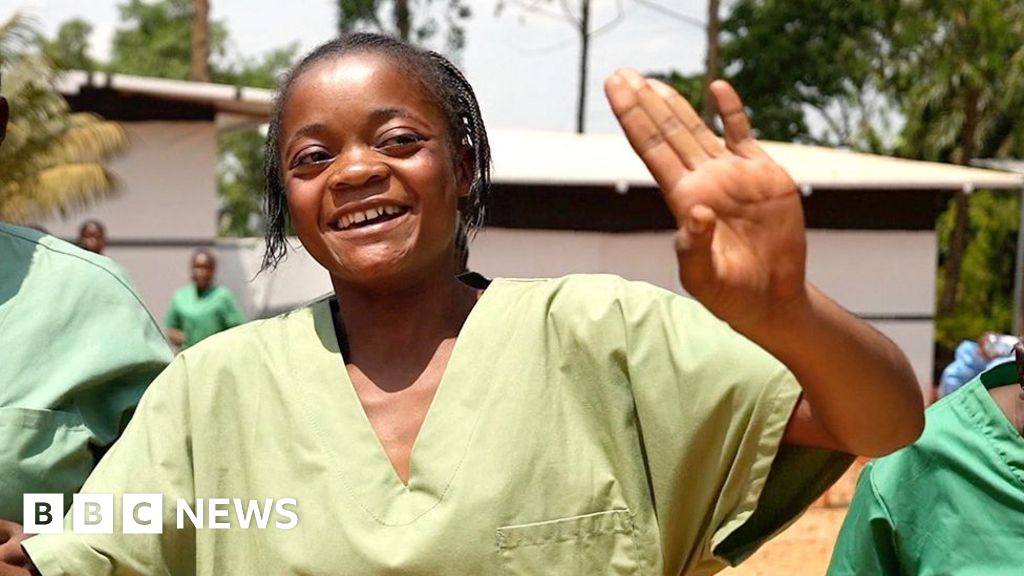
In the heart of the Democratic Republic of Congo’s Ituri province, where a deadly Ebola outbreak has claimed over 170 lives, there are rare but powerful moments of celebration. At a treatment centre in Mongbwalu, healthcare workers recently sang and danced as they discharged a patient who had survived the virus, offering a glimpse of hope amid a crisis marked by fear, misinformation, and loss. This scene of joy is not just a fleeting moment; it reflects a critical shift in the community’s response to a disease that has long haunted the region.
Why this matters
The ongoing Ebola outbreak in northeastern Congo underscores the complex interplay between public health, community trust, and cultural beliefs in managing infectious diseases. Despite the virus’s high fatality rate—killing around one in five infected with the rare Bundibugyo strain—survivors like Daniel Kitambala symbolize the possibility of recovery and the effectiveness of medical intervention. However, the outbreak’s persistence reveals deeper challenges: combating misinformation, overcoming fear of treatment centres, and ensuring timely diagnosis and isolation of cases.
Understanding these dynamics is crucial not only for controlling this outbreak but also for shaping future epidemic responses in fragile settings where health infrastructure is limited and social trust is fragile. The lessons emerging from Ituri have implications for global health security, as the world continues to face threats from emerging and re-emerging infectious diseases.
From Fear to Faith: Changing Community Perceptions
One of the most significant hurdles in this outbreak has been the community’s mistrust of Ebola treatment centres. In Mongbwalu and surrounding areas, myths have circulated that these centres cause harm rather than provide care. A particularly damaging belief, known locally as the “coffin curse,” arose after an incident involving a broken coffin during a funeral procession. This event fueled fears that burning the coffin had cursed the community, leading to a spike in deaths blamed on supernatural causes rather than the virus itself.
Such beliefs are not uncommon in regions where modern medicine intersects with traditional worldviews. They can delay patients seeking treatment, increasing the risk of transmission and fatality. Healthcare workers and local leaders have been working tirelessly to dispel these myths, emphasizing that Ebola is a medical condition that can be treated. The successful recovery and discharge of patients have become powerful testimonies, gradually rebuilding trust and encouraging more people to come forward for care.
Healthcare Workers on the Frontlines
Healthcare professionals in Ituri face extraordinary risks and challenges. Five health workers have died in this outbreak, and many more have contracted the virus, highlighting the occupational hazards endemic to Ebola response. Despite these dangers, medical teams have improved infection prevention protocols, reducing transmission risk within treatment centres.
Moreover, the establishment of a local laboratory in Mongbwalu has been a game changer. Previously, test results took over a week to arrive from the provincial capital, Bunia. Now, results are returned within a day, enabling faster isolation of cases and contact tracing. This improvement not only accelerates medical response but also helps counter rumors by providing clear evidence of infection status.
Living with Ebola: Patient Stories and Family Impact
The human toll of Ebola extends beyond the immediate health effects. Families in Ituri are deeply affected, with many losing multiple members. Eli Asimwe Bawere’s story is emblematic: he has lost both his mother and sister-in-law to the disease while his brother remains hospitalized. Such losses are compounded by social isolation, as patients are separated from loved ones during treatment to prevent further spread.
At the Rwampara treatment centre, visiting protocols are carefully managed to balance safety with the emotional needs of patients and families. Barriers and glass screens allow loved ones to see patients without direct contact, preserving connections amid strict infection control measures. Stories like that of Mireille Gahindo, who battled Ebola alongside her infant child and looks forward to reuniting with her family, highlight the resilience of those affected and the vital role of compassionate care.
Challenges Ahead: Contact Tracing and Containment
Despite progress, the outbreak is far from over. Health officials warn that many contacts of infected individuals remain untraced, posing a significant risk of ongoing transmission. Contact tracing is critical in Ebola control, requiring meticulous identification and monitoring of anyone who may have been exposed.
Violence against treatment centres, such as the arson attacks on facilities in Mongbwalu and Rwampara, further complicates containment efforts. These acts often stem from fear and misinformation, underscoring the need for sustained community engagement and security measures to protect healthcare workers and infrastructure.
Ultimately, the success of the response depends on a multi-faceted approach that integrates medical treatment, rapid diagnostics, community education, and social support. The moments of joy captured in Mongbwalu are not just celebrations of individual survival—they are beacons of hope that the outbreak can be brought under control with continued vigilance and collaboration.