
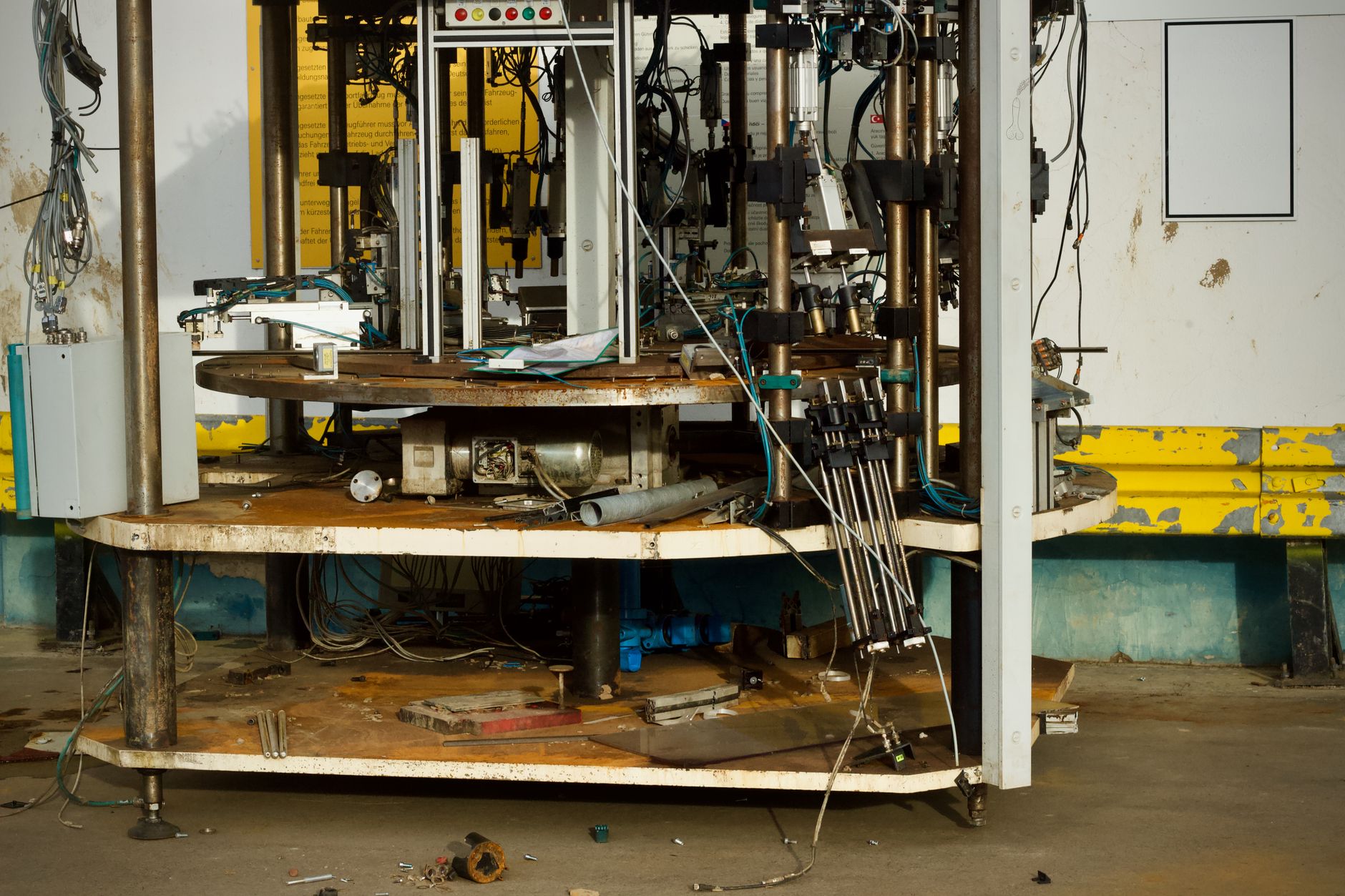
Europe’s automotive industry is at a crossroads, grappling with declining production, shrinking market share, and mounting competition from Chinese manufacturers. Yet, amid this turmoil, a surprising lifeline is emerging: the continent’s renewed focus on military rearmament. As geopolitical tensions rise, European carmakers are exploring defence contracts as a means to revitalize their factories and preserve thousands of jobs, raising critical questions about the future of manufacturing and industrial strategy in the region.
From Civilian Vehicles to Military Machines: A Strategic Pivot
Once the backbone of European industrial might, car manufacturing has seen a steady erosion over the past decade. Factories that once hummed with the production of millions of vehicles now operate well below capacity. Ford’s Dagenham plant in the UK exemplifies this shift. Historically a giant in engine manufacturing, its output has halved in recent years. However, the plant’s latest project—a rugged military-grade pick-up truck designed for heavy loads and tough terrain—signals a strategic pivot toward defense manufacturing.
Ford, alongside other major players like Jaguar Land Rover (JLR) and Renault, is actively bidding for military contracts. For instance, Ford and JLR are competing to supply the British Army’s new Light Mobility Vehicles, aiming to replace the aging Land Rover fleet by 2030. Meanwhile, Renault’s partnership with defence giant Thales to mass-produce military drones highlights a broader trend of leveraging automotive production expertise for defence needs.
Defence Spending Surge: An Industrial Opportunity or a Temporary Fix?
Europe’s response to the perceived threat from Russia, coupled with a more cautious stance from the United States on European security, has triggered a massive increase in defence budgets. This surge offers carmakers a rare chance to utilize idle manufacturing capacity and secure new revenue streams. The Society for Motor Manufacturers and Traders (SMMT) notes that the UK automotive sector alone has seen output decline by roughly 50% over the past decade, with significant impacts rippling through its supply chains.
Yet, while defence contracts provide a welcome boost, industry experts caution that military production cannot fully offset the loss of mass-market vehicle manufacturing. Defence vehicles and equipment require different production volumes, technical standards, and security protocols. The scale of military demand simply cannot replace the millions of consumer vehicles churned out annually.
China’s Challenge: The Rising Tide of Competition
The difficulties faced by European carmakers are compounded by the rapid ascent of Chinese automotive firms. Once a lucrative market for Western manufacturers, China has transformed into a fiercely competitive arena dominated by domestic brands heavily supported by state funding. Companies like BYD, Chery, and Geely are now aggressively expanding into Europe, leveraging electric vehicle (EV) technology and cost advantages.
European manufacturers invested heavily in EV production to meet ambitious government targets but have struggled to match the pace and price competitiveness of Chinese rivals. Volkswagen’s recent announcement to cut 100,000 jobs and close several factories underscores the severity of the crisis. With overcapacity estimated at 2.5 million vehicles annually in Western Europe, the industry faces an existential question: how to maintain viability in a market rapidly reshaped by new entrants and shifting consumer preferences.
Collaborations and Controversies: Opening Doors to Foreign Partners
One controversial approach to addressing excess capacity has been to invite Chinese manufacturers into European factories. Stellantis, for example, has taken a stake in Chinese EV maker Leapmotor, which produces vehicles in Europe. Nissan is exploring contract manufacturing with Chery at its Sunderland plant, and Volkswagen is considering joint ventures with Chinese partners to share factory capacity.
While these collaborations could help keep European plants operational and avoid tariff barriers, they raise concerns about the erosion of local supply chains and the long-term sovereignty of Europe’s automotive industry. Final assembly in Europe does not guarantee that critical components, especially batteries, will be sourced locally, potentially undermining industrial independence.
The Broader Implications: Jobs, Sovereignty, and Industrial Policy
Automotive manufacturing remains a vital pillar for many European regions, providing employment and supporting extensive supply networks. Job cuts at JLR, which recently announced 4,000 layoffs, have sent shockwaves through the UK supply chain, illustrating how closely intertwined these companies are with local economies.
Governments face a delicate balancing act: fostering innovation and competitiveness while protecting strategic industries that underpin national security and economic stability. The renewed emphasis on defence production offers a partial solution but also highlights the urgent need for comprehensive industrial policy that addresses the challenges posed by globalization, technological disruption, and geopolitical shifts.
As Europe navigates this complex landscape, the question remains whether defence contracts can serve as a bridge to a sustainable future for the continent’s automotive sector or merely delay an inevitable structural transformation. What is clear is that the industry’s survival will depend on adaptability, strategic partnerships, and a willingness to rethink traditional manufacturing paradigms in an increasingly uncertain world.
Recommended reading
For more context, see related Peack News coverage and explainers linked below.