
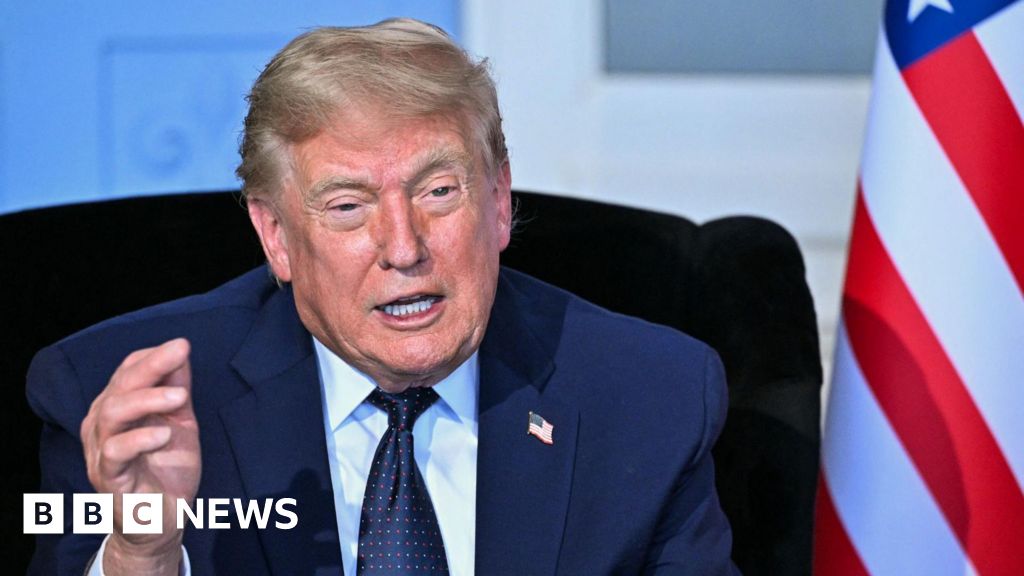
President Donald Trump announced that a preliminary agreement to end hostilities between the United States and Iran has been signed, marking a potential turning point in a conflict that has gripped global attention for years. The deal, described as a brief memorandum of understanding, promises to reopen the strategically vital Strait of Hormuz and initiate a ceasefire across multiple fronts, including Lebanon. However, many details remain vague, and the deal’s implementation will hinge on a complex series of technical negotiations and verifiable commitments.
Why this matters
The announcement of a signed agreement between the US and Iran carries profound implications for regional stability, global energy markets, and international diplomacy. The Strait of Hormuz, through which roughly a fifth of the world’s oil passes, has long been a flashpoint for military tension. Its reopening could ease fears of supply disruptions and reduce volatility in oil prices. More broadly, a ceasefire and roadmap to peace between two longstanding adversaries could reshape alliances and power dynamics across the Middle East.
Yet, the deal’s preliminary nature and the admitted generality of its terms raise questions about its durability. The framework sets the stage for further negotiations but leaves open critical issues such as nuclear inspections, sanctions relief, and the role of proxy groups in regional conflicts. How these elements are resolved will determine whether this agreement is a genuine breakthrough or another fragile pause in hostilities.
Key components of the preliminary deal
According to statements from US officials, the memorandum of understanding (MOU) is concise—about a page and a half—and outlines broad commitments rather than detailed protocols. Among its core provisions are:
- Ceasefire extension: The deal extends a ceasefire for 60 days, during which further negotiations will finalize a comprehensive peace agreement.
- Reopening of the Strait of Hormuz: Military blockades will be lifted, allowing the free passage of shipping and oil tankers, a move expected to stabilize global energy markets.
- Commitment to regional peace: Iran pledges to halt funding for terrorist organizations and contribute to regional stability, addressing one of the US’s longstanding concerns.
- Nuclear oversight: The International Atomic Energy Agency (IAEA) will resume inspections, and Iran agrees to destroy its stockpile of highly enriched uranium, a critical step toward preventing nuclear weapon development.
The challenges ahead
Despite the optimistic framing, the deal leaves many contentious issues unresolved. The agreement’s general language means that technical teams will need to painstakingly work out verification mechanisms, timelines, and conditions for sanctions relief. Iran’s mistrust of the US remains deep-seated, and Tehran has emphasized that this is only a preliminary step toward reducing tensions.
Moreover, the regional dimension complicates matters. Israeli Prime Minister Benjamin Netanyahu has made clear that Israel will maintain its military presence in Lebanon, Syria, and Gaza “as long as necessary,” signaling ongoing friction. Israeli strikes in southern Lebanon shortly after the announcement underscore the fragility of the ceasefire and the potential for rapid escalation.
The involvement of proxy groups like Hezbollah, which Iran supports, further muddies the waters. Iran’s foreign minister warned that any Israeli attacks on Lebanon would be seen as violations of the deal, heightening the risk of renewed conflict.
Diplomatic dynamics and international reactions
The timing of the announcement coincides with the G7 summit in France, where Iran’s situation is a focal point for discussion among global leaders. Countries like the UK and France have previously advocated for a multinational naval presence to secure the Strait of Hormuz, reflecting the international community’s vested interest in regional stability.
President Trump, however, downplayed the need for extensive foreign naval support, suggesting the US could manage security largely on its own, though he acknowledged it wouldn’t be “a bad idea” to have allied ships present.
Pakistan’s Prime Minister Shehbaz Sharif, whose country played a mediating role, hailed the agreement as a significant step toward ending military operations not only in Iran but also in Lebanon, signaling broader regional implications.
The road to a final peace deal
While the memorandum sets a hopeful tone, the path to a lasting peace remains fraught. Sanctions relief and the release of frozen Iranian assets will depend on Iran’s compliance with its commitments, which will be closely monitored by international inspectors. The US and Iran will need to build trust through transparency and adherence to the agreement’s terms.
Technical negotiations beginning this week in Geneva will be critical. These talks must address nuclear program constraints, verification protocols, and mechanisms to ensure that Iran does not covertly advance nuclear weapons capabilities.
For the global community, the stakes are high. Success could herald a new era of diplomacy and stability in one of the world’s most volatile regions. Failure, however, risks reigniting conflict, destabilizing energy markets, and undermining international efforts to curb nuclear proliferation.
In sum, President Trump’s announcement signals a tentative but potentially transformative moment in US-Iran relations. The coming weeks will reveal whether this framework can evolve into a durable peace or remains a fleeting pause in a long-standing conflict.