
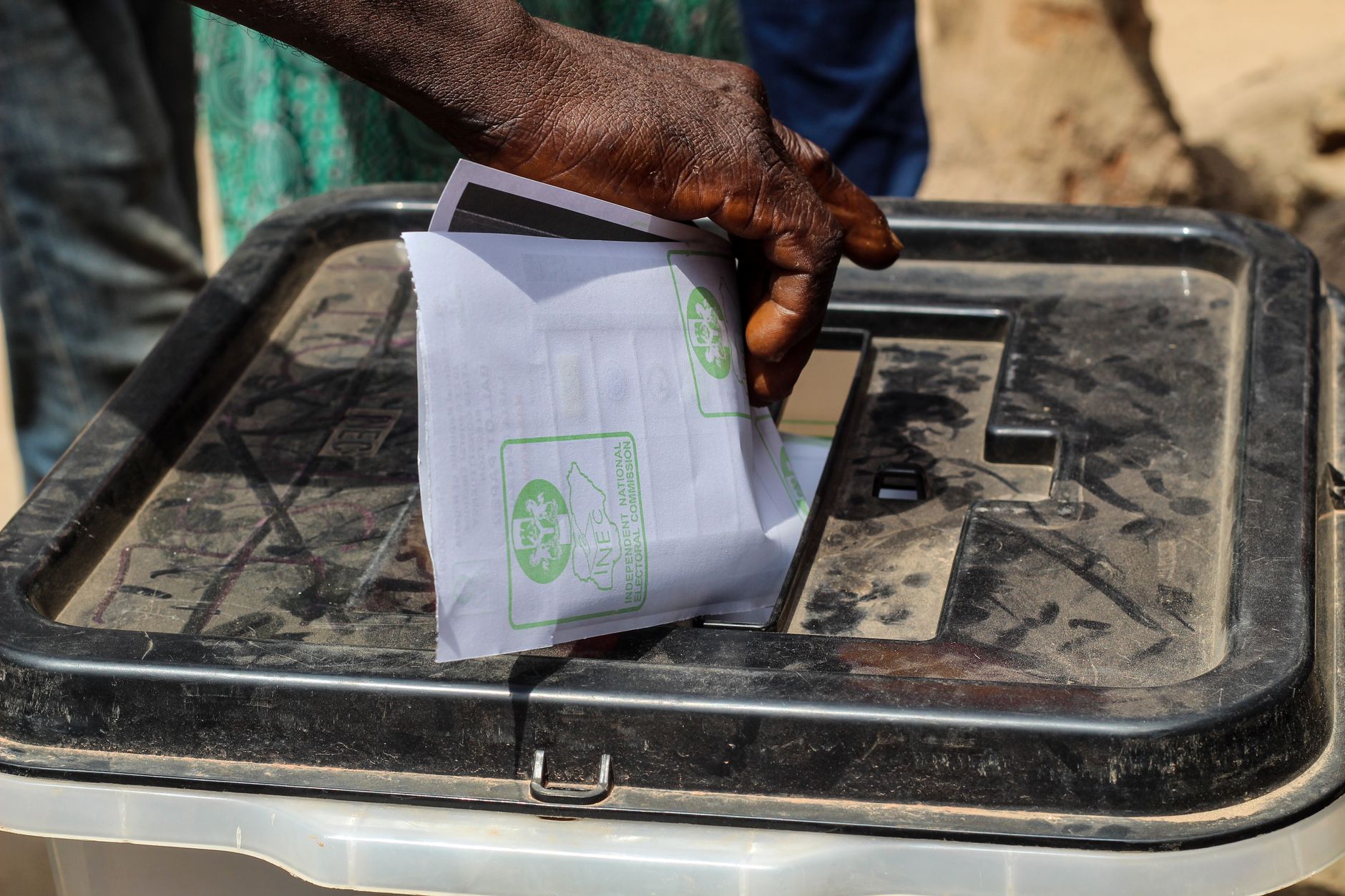
Once the dominant force in Nigerian politics, the Peoples Democratic Party (PDP) now faces a precarious future that threatens to erase its legacy entirely. Founded in 1998 and instrumental in Nigeria’s transition from military rule to democracy, the PDP’s dramatic decline over the past decade illuminates the complex realities of political survival in Africa’s most populous nation. As the party struggles with internal divisions, defections, and electoral irrelevance, its fate offers a cautionary tale about the fragility of political power in a rapidly evolving landscape.
The Rise and Fall of a Political Giant
At the dawn of Nigeria’s Fourth Republic in 1999, the PDP emerged as the undisputed political powerhouse. Its presidential candidate, Olusegun Obasanjo, won the election decisively, marking the end of decades of military dictatorship and the beginning of civilian rule. For 16 years, the party maintained a firm grip on the presidency and controlled the majority of Nigeria’s 36 states. Successive PDP presidents—Obasanjo, Umaru Musa Yar’Adua, and Goodluck Jonathan—oversaw a period of relative political stability and economic growth.
However, the party’s dominance bred complacency. By 2008, PDP officials openly boasted that the party would govern Nigeria for six decades. This confidence was shattered in 2015 when the PDP lost the presidency to Muhammadu Buhari’s All Progressives Congress (APC), a coalition of opposition forces and disgruntled former PDP members. This defeat was not just a loss of office but a seismic political shock that exposed the party’s vulnerabilities and set it on a downward spiral.
Opposition Challenges and Internal Strife
Transitioning from a ruling party to an opposition force proved a challenge the PDP was ill-prepared for. The party’s leadership, accustomed to wielding power, struggled to redefine its identity and strategy outside government. Political analysts note that the PDP’s inability to adapt quickly to opposition politics hindered its effectiveness and cohesion.
By 2025, the party’s internal fractures became impossible to ignore. A wave of defections by key state governors to the APC decimated the PDP’s control at the state level. From holding eight states at the start of the year, the party was reduced to zero by early 2026, losing even its strongholds like Oyo state. These defections were driven by a mix of strategic calculations and dissatisfaction with the PDP’s leadership and prospects.
Factionalism further deepened the crisis. Rival groups within the party engaged in bitter power struggles, culminating in a contested national convention in Ibadan in late 2025. The convention, held despite court injunctions, expelled prominent members and intensified divisions. The legal recognition of the faction led by Nyesom Wike, a founding PDP member now aligned with the ruling APC, created a paradox where the party’s legitimate representatives faced questions of loyalty and credibility.
Leadership Crisis and Legal Battles
The leadership tussle has paralyzed the PDP’s organizational machinery. With competing factions claiming legitimacy, the party’s ability to present a united front in elections has been severely compromised. The faction recognized by the courts managed to submit candidates for the upcoming general elections, but the internal discord has left many voters skeptical.
This leadership crisis underscores a broader challenge in Nigerian politics: the role of personal ambition and regional loyalties in fracturing political parties. The PDP’s insistence on rotating power among regions, disciplinary actions against dissenters, and failure to manage internal disputes have alienated many of its traditional supporters and high-profile figures, including former Vice-President Atiku Abubakar, who left the party in 2025.
Can the PDP Rebuild and Regain Relevance?
Despite these setbacks, some PDP loyalists remain hopeful. They point to the party’s enduring grassroots network, which includes local offices, activists, and community leaders. These structures provide a foundation for rebuilding if the party can resolve its internal conflicts and clarify its vision.
Political commentators suggest that the PDP’s survival may hinge on forming strategic alliances with emerging opposition groups like the African Democratic Congress or Peter Obi’s Nigeria Democratic Congress. Without such coalitions, the party risks irrelevance in a political landscape increasingly dominated by the APC and newer challengers.
The timeline for a PDP resurgence, if it occurs, is uncertain. Some optimists believe a revival could happen by 2032, but this depends on significant internal reforms and the ability to reconnect with disillusioned voters. For now, the PDP’s decline serves as a stark reminder that political dominance is never guaranteed and must be continuously earned.
Implications for Nigeria’s Democratic Future
The PDP’s decline is more than the fall of a single party; it reflects the evolving nature of Nigerian democracy. The rise of the APC and the fragmentation of opposition forces signal a shift in political dynamics where old allegiances and structures are being challenged. This realignment could lead to greater political competition, but it also risks increasing instability if parties fail to manage internal disputes effectively.
Moreover, the PDP’s struggles highlight the importance of institutional strength over personality-driven politics. Nigeria’s democracy will benefit from parties that can withstand leadership changes and internal disagreements without collapsing. The fate of the PDP will thus be watched closely as a bellwether for the health of Nigeria’s multiparty system.
Recommended reading
For more context, see related Peack News coverage and explainers linked below.