
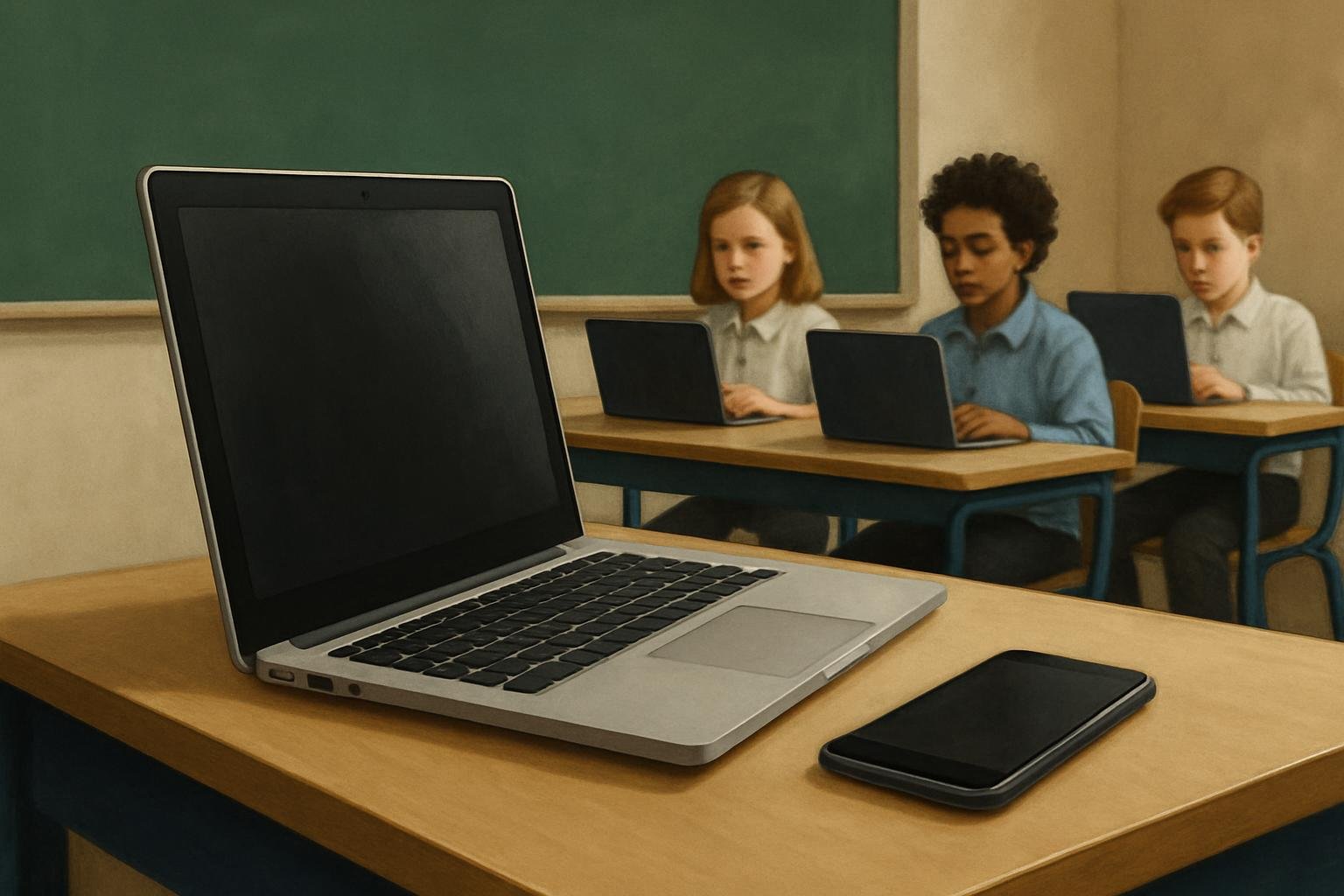
Guardian editorial highlights scrutiny of technology in schools
The Guardian editorial discusses the increasing scrutiny of the impact of technology on children’s lives and education. This scrutiny has been prompted by a new law in England banning mobile phone use in schools, a move reluctantly agreed upon by ministers after pressure from Liberal Democrat and Conservative peers. Until this change, the government had maintained that advice to headteachers was sufficient to manage technology use in schools.
Technology’s deep integration in education
Digital technology is deeply embedded in education, from messaging platforms used by pupils and teachers to appointment-booking systems and research conducted during lessons and at home. The editorial notes that this integration should not be expected to change, as classrooms reflect the wider world. However, the growing push for stronger scrutiny of screens in schools and young people’s lives is justified by accumulating evidence about their effects.
Examples from other countries illustrate this trend. In Norway and Sweden, policies promoting iPads and laptops have been reversed in favor of books and handwriting after declines in reading scores were recorded. In the UK, new guidance recommends that children under five should spend no more than one hour daily on screens and avoid fast-paced, social-media style videos. Even in California, restrictions on device use for elementary and middle school students in Los Angeles will begin in September.
Concerns about technology’s impact on children
The editorial emphasizes that not all technology is the same, and neither are all brains. Children and adolescents have specific needs and vulnerabilities that can be exploited by businesses aiming to maximize engagement. Whistleblowers like Frances Haugen have highlighted how teenagers’ focus on status and appearance is targeted by tech companies. Early-years experts argue that hyper-stimulating content can hinder brain and language development in young children.
There is also concern about replacing books with devices that deliver personalized, algorithmic feeds, as reading has traditionally been valued for fostering curiosity and empathy. The editorial points out that adults are also affected by these changes, as everyone interacts dynamically with communication tools.
While public policy aims to be evidence-based, researchers struggle to keep pace with rapid technological development. Historically, the approach to big tech has been largely laissez-faire. However, the editorial suggests that a more precautionary regulatory approach is now being seriously considered, especially regarding the impact on children’s developing minds.